

Artificial intelligence is quickly transforming how people interact with technology. Instead of manually navigating apps and typing commands, many companies are exploring devices that allow users to complete tasks through natural conversation with AI systems. One of the most talked-about gadgets in this category is the Rabbit R1, a compact AI-powered device designed to function as a personal digital assistant.
Developed by startup Rabbit Inc. and co-designed with the well-known electronics design firm Teenage Engineering, the Rabbit R1 aims to simplify daily interactions with technology. The device is built around a voice-first interface, allowing users to perform tasks simply by speaking commands. From searching the web and playing music to booking rides and ordering food, the device attempts to act as a universal assistant for everyday activities.
The concept behind the Rabbit R1 is ambitious: reduce reliance on smartphones by letting artificial intelligence handle digital tasks automatically. While the idea has generated excitement among tech enthusiasts, the device has also sparked debate about whether standalone AI gadgets can truly replace modern smartphones.
The Vision Behind the Rabbit R1
The Rabbit R1 was introduced as part of a growing movement toward AI-native hardware, devices designed primarily around artificial intelligence rather than traditional apps or interfaces. Unlike smartphones that require users to switch between different applications, the Rabbit R1 attempts to unify these actions through a single AI assistant.
The device runs on Rabbit OS, an operating system built on the Android Open Source Project. Instead of launching individual apps, the system uses AI models to interact with services and perform tasks on behalf of the user.
For example, instead of opening a ride-sharing app and manually entering a destination, a user could simply ask the device to book a ride. The AI assistant then handles the necessary steps automatically. This system relies on what the company calls a Large Action Model, which allows the AI to execute real-world actions such as ordering food, playing music, or retrieving information online.
This approach represents a shift from app-based computing to task-based computing, where artificial intelligence manages digital services behind the scenes.
Hardware Design and Physical Features
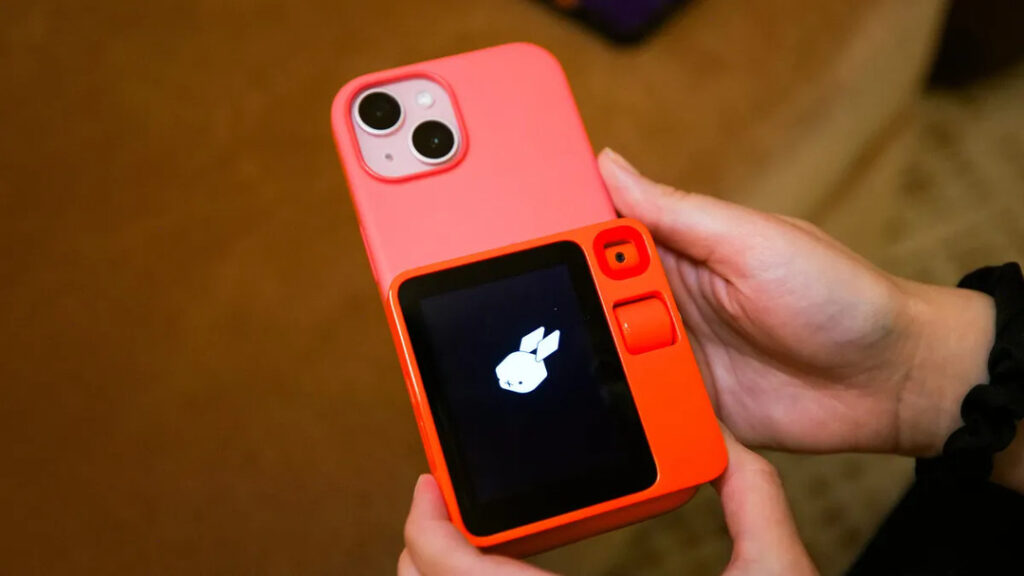
The Rabbit R1 stands out immediately due to its unusual design. The device is a small, square gadget with a bright orange casing that gives it a retro-futuristic appearance. Despite its compact size, it includes several hardware components designed to support its AI-driven functionality.
The front of the device features a 2.88-inch touchscreen display, which allows users to view responses, navigate menus, and interact with visual elements.
In addition to the screen, the device includes:
- A push-to-talk button used to activate voice commands
- A scroll wheel for navigation
- Dual microphones for voice input
- A speaker for audio responses
- An 8-megapixel camera used for visual AI interactions
The camera enables the device to perform visual searches, allowing users to point the device at objects and ask questions about them. This feature reflects the growing trend of combining computer vision with conversational AI.
Connectivity options include Wi-Fi and cellular support via a SIM card slot, ensuring that the device can access online services even when a smartphone is not nearby.
AI Features and Everyday Use Cases
At the heart of the Rabbit R1 is its AI assistant, which is designed to perform a wide variety of everyday tasks. The device can answer questions, search for information, translate languages, and manage digital services through voice commands.
For example, users can ask the device to:
- search the internet for information
- play music from streaming services
- translate conversations between languages
- order food or request ride-sharing services
Because the device focuses on voice interaction, it aims to reduce the need for typing or tapping on a screen. This design philosophy aligns with the broader trend of conversational interfaces, where users communicate with technology in the same way they would speak with another person.
However, the success of this approach depends heavily on the reliability of the AI system and its ability to understand complex commands.
Product Review: Rabbit R1
Price
One of the most attractive aspects of the Rabbit R1 is its relatively affordable price compared with other experimental AI devices. The gadget launched with a one-time cost of approximately $199, with no mandatory subscription fees for the basic AI services.
This pricing strategy helped the device generate significant interest during its launch, as many competing AI platforms require ongoing monthly payments.
Where to Buy
The Rabbit R1 can be purchased from several sources online:
- Official website: https://www.rabbit.tech
- Retail listing example: https://www.bestbuy.com
These platforms provide official product information, availability updates, and purchase options depending on the region.
Performance and User Experience
In everyday use, the Rabbit R1 offers a fast and responsive voice interface, typically processing commands within a few seconds. The minimalist interface and quick startup make the device feel simple and approachable for new users.
Battery performance varies depending on usage. Reviews suggest that the device can operate for roughly 5–8 hours of active use, which is acceptable for a compact AI gadget but shorter than typical smartphone battery life.
The voice recognition system generally works well for straightforward commands, though complex instructions can occasionally be misunderstood. Because the device relies heavily on cloud-based AI processing, a stable internet connection is essential for consistent performance.
Advantages
The Rabbit R1 introduces several interesting ideas about the future of personal technology. Its voice-first interface offers a more natural way to interact with AI, and its compact design makes it easy to carry anywhere.
Another strength is the device’s focus on automation. Instead of forcing users to navigate multiple apps, the AI assistant attempts to handle tasks directly.
The affordable price also makes the gadget accessible to early adopters interested in experimenting with new AI technology.
Drawbacks
Despite its innovative concept, the Rabbit R1 has received mixed reviews from technology critics. Some reviewers argue that many of its features are already available on smartphones through digital assistants and AI apps.
Others have pointed out that certain functions remain limited or inconsistent, particularly during the early stages of the device’s software development.
These issues highlight the challenges of creating entirely new categories of AI hardware.
Final Score
Performance: 7 / 10
Innovation: 9 / 10
Design: 8 / 10
Value for Money: 8 / 10
⭐ RAVE-TECH Overall Rating: 8 / 10
The Rabbit R1 earns a solid score for its bold concept and unique design, though its long-term success will depend on how quickly its AI software continues to improve.
Final Thoughts
The Rabbit R1 represents an important experiment in the evolution of artificial intelligence hardware. By focusing on voice interaction and task automation, the device attempts to move beyond the traditional smartphone model.
While the technology still faces challenges, it offers a glimpse into a future where AI assistants manage many of our daily digital tasks. Whether standalone AI gadgets will eventually replace smartphones remains uncertain, but devices like the Rabbit R1 are helping shape the conversation about how humans will interact with technology in the coming years.
For technology enthusiasts and early adopters, the Rabbit R1 is an intriguing device that demonstrates both the potential and the growing pains of AI-native hardware.