
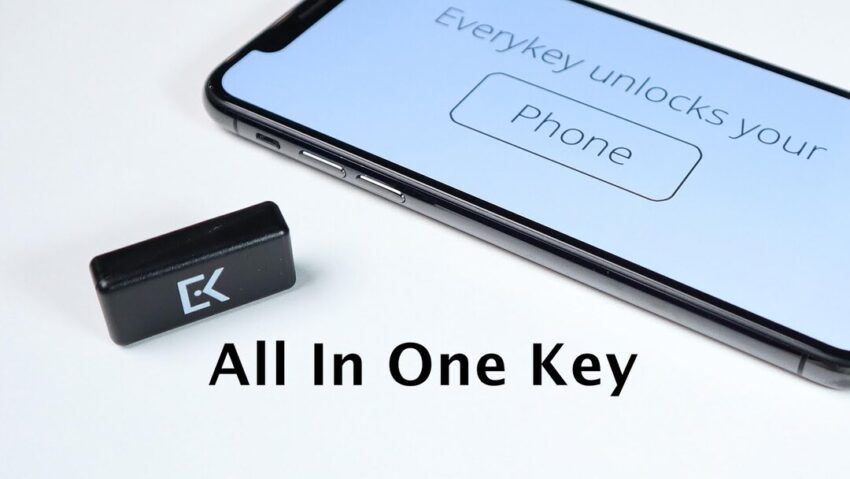
There is something instantly appealing about the promise behind a product like EveryKey. At a moment when digital life feels both overprotected and oddly inconvenient, the idea of security that fades into the background has real power.
That is exactly why this product matters right now. We are all trying to strike the same difficult balance: stronger protection, less friction, and fewer tiny interruptions scattered through the day. In theory, EveryKey lands squarely in that sweet spot. In practice, my experience with it feels more complicated.
First Impressions
The first thing that pulls me in is the concept. EveryKey is built around proximity-based access, which means it is designed to recognize when I am nearby and make logging in feel less like a ritual and more like a seamless extension of daily life. The pitch is modern, efficient, and easy to understand: why should I keep typing credentials, approving prompts, and juggling devices if my digital environment can already tell that I am present?
On paper, that sounds not only smart but overdue.
As I spend time with the product, though, the first impression begins to split into two very different reactions. One is admiration for the underlying idea. The other is a creeping awareness that good security tools cannot survive on vision alone. They have to be reliable, clear, and trustworthy in ordinary moments, not just exciting in a product demo.
That tension defines this entire experience.

What The Experience Feels Like
Using EveryKey feels a little like stepping into the early version of a future I want to live in. When the system behaves the way it is supposed to, the appeal is obvious. The convenience is not just about speed. It is about removing the constant mental tax of logging in, authenticating, and proving identity again and again throughout the day.
I can feel the elegance of the idea almost immediately. Security becomes ambient. Access feels personal. The best version of the experience is not flashy; it is quiet. That is the real ambition here.
But proximity-based security is only satisfying when it feels invisible and dependable, and that is where the cracks begin to matter. The more I think about this as a daily tool rather than a clever concept, the more I focus on the parts that need to work without hesitation: setup, device recognition, reliability, battery confidence, and overall consistency.
That is the challenge with any identity or access product. I do not need it to impress me once. I need it to disappear into my routine and earn trust over time. EveryKey gets close to that ideal in theory, but it does not always feel fully settled there in execution.
For readers curious about the broader context of digital identity and authentication, the EveryKey review conversation makes more sense when viewed alongside current best practices in authentication and access control.
What Stands Out
What stands out most is that EveryKey is trying to be more than a novelty gadget. It is no longer just a clever consumer-side convenience story. The larger vision appears to be about access management across devices, apps, and network environments. That gives it a more serious and potentially more relevant place in today’s market.
I find that shift interesting because it moves the product from “helpful accessory” into the much more demanding category of trust infrastructure. And once a product enters that category, the standard changes. I stop asking whether it is innovative and start asking whether it is dependable enough to sit between me and everything important.
There is genuine value in the friction-reduction it aims to deliver. For people managing multiple devices or for organizations trying to simplify authentication without weakening control, the basic proposition is still compelling. The product’s strongest quality is that it identifies a real problem. Too many security tools solve risk by creating annoyance. EveryKey tries to solve risk while reducing annoyance. That is a worthwhile goal.
Still, what stands out just as much is the feeling that the ecosystem around the product is not yet as reassuring as the idea itself. For something tied to login behavior and access control, I want a high level of clarity, maturity, and confidence. I want the support experience to feel robust. I want the feature set to feel complete without caveats. I want reliability to be boring in the best possible way.
This is where EveryKey feels promising rather than definitive.
| Category | My Take |
|---|---|
| Core Idea | Smart, modern, and genuinely useful |
| Ease Of Daily Use | Strong when it works smoothly |
| Reliability Confidence | More mixed than I would want |
| Value Proposition | Interesting, but not fully convincing |
| Overall Verdict | Promising, but not yet essential |
Pros And Cons
- Pros
- Clever proximity-based approach that reduces login friction
- Ambitious vision for device, app, and network access
- Strong appeal for users who want security to feel more seamless
- Potentially useful in managed or multi-device environments
- Cons
- Setup and day-to-day consistency do not always feel effortless
- Reliability concerns matter more here than they would in a lower-stakes product
- Some features can feel gated or less complete than expected
- The overall trust factor still lags behind more established security platforms
Who This Is Best For
I would put EveryKey in front of a very specific kind of user. This is best for people who are genuinely drawn to the convenience of presence-based authentication and are willing to tolerate a product that still feels like it is proving itself. It may also appeal to teams that are curious about alternatives to more conventional login workflows and are open to testing a different access model in a controlled way.
It is much less convincing for anyone who wants immediate polish, mature support, and rock-solid confidence from day one. If I am recommending a security product to someone who values predictability above all else, I am far more cautious here. The category is simply too important for uncertainty to feel acceptable.
Final Verdict
EveryKey is one of those products that earns attention because it is trying to solve the right problem in the right way. I admire the ambition behind it. I can see why the concept resonates. In its best moments, it points toward a more humane version of digital security, one where authentication becomes effortless instead of intrusive.
But a good idea is not the same thing as a fully convincing product.
After sitting with the experience, my conclusion is clear: EveryKey feels promising but not yet indispensable. It is interesting, potentially useful, and directionally smart, but it does not consistently project the level of maturity I want from something connected to identity and access. That does not make it a failure. It makes it a product still caught between vision and trust.
And that is why it matters right now. We are entering a period where convenience and security can no longer be treated as opposing forces. Products like EveryKey are trying to close that gap. Whether this one is ready to lead that shift is another question. For now, I see it as a compelling idea with real potential, but not yet the first solution I would reach for when the stakes are high.