

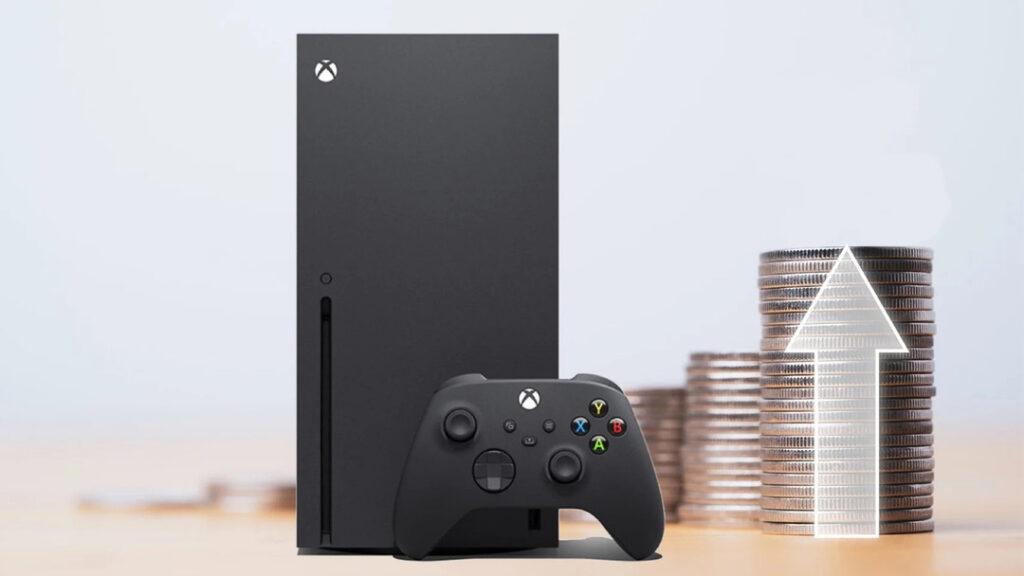
The Xbox Series X used to win its argument quickly: pay console money, get high-end living-room performance, and stop worrying about PC settings. Microsoft’s August price increase breaks that simplicity. The Xbox console price hike now forces buyers to compare the Series X not only with PlayStation hardware, but with handheld PCs, refurbished consoles and entry-level gaming computers.
That comparison matters because the wider console buying landscape has changed dramatically since the Series X launched. Portable PCs are stronger, cloud access is broader and Microsoft itself has made Xbox games less dependent on an Xbox-shaped box.
The Xbox Console Price Hike Changes the Entire Value Test
Microsoft’s August pricing update raised worldwide prices by $100 for 512GB consoles and $150 for 1TB models, effective August 1. The company is also retiring the 2TB model.
The new U.S. pricing puts the 512GB Series S at $499.99, the 1TB Series S at $599.99, the all-digital Series X at $749.99 and the disc Series X at $799.99.
A $499 Series S no longer feels like a low-risk entry point. A $799 Series X is no automatic bargain beside a gaming PC. The console still offers predictable television performance, but convenience now carries a premium.
That is the central problem for Microsoft. The Series X hardware has not suddenly become worse. Its price has simply moved far enough that buyers must ask what else the same money can purchase.
Handheld PCs Now Sit Uncomfortably Close
The standard ROG Xbox Ally launched around the same broad price territory as the new Series S, while higher-end handhelds can approach or exceed Series X pricing. Handheld PCs usually deliver less raw performance than a Series X, but they offer something the console cannot: a portable Windows library.
Microsoft’s own Xbox handheld lineup sharpens the conflict. Xbox Play Anywhere titles can move between supported consoles, PCs and handhelds, while Windows devices can also access other storefronts and productivity software.
A Series X remains better for stable television performance, minimal setup and freedom from Windows or battery concerns. Yet a portable PC can serve as a travel system, docked desktop and multi-store gaming machine.
At $499, the Series S once escaped that debate. At its new price, it enters it.
The Series S Is Still Cheaper, but No Longer Cheap
Microsoft calls the Series S its lowest-cost console route, and that remains true within the Xbox range. The problem is that lowest cost is not the same as strong value.
The 512GB model has limited usable storage, no disc drive and lower performance targets than the Series X. Expansion storage can add meaningful cost. Buyers who add a storage card may find themselves spending close to Series X territory without gaining the faster hardware or physical-game flexibility.
The 1TB Series S is harder to defend at $599.99. It solves the most obvious storage complaint, but it still carries the Series S performance ceiling. At that price, shoppers can reasonably consider a used Series X, a discounted handheld or a modest desktop assembled around upgradeable parts.
The Series S still fits families, Game Pass users and players with 1080p displays. It is simply no longer the default recommendation for anyone asking for the cheapest sensible Xbox.
Refurbished Hardware Has Become the Rational Xbox Buy
The price rise makes Microsoft’s certified-refurbished and planned previously played programs much more important. The company says it is working with retail partners on trade-ins and lower-priced used systems, while its current console listings separate new and refurbished inventory.
For a mature console generation, refurbished hardware can be smarter. Buyers receive the same library and performance without the full late-generation premium.
Certified units should include a clear warranty, tested hardware and transparent cosmetic grading. Marketplace listings from unknown sellers may be cheaper, but controller wear, fan noise, storage health and repair history can turn a bargain into an expensive problem.
A discounted disc-based Series X is attractive because physical games create another savings path. Used discs, retailer clearances and resale value can reduce the long-term cost of ownership in a way an all-digital system cannot.
Memory Costs Explain the Increase, Not the Purchase
Microsoft says console storage and memory prices have risen more than 2.5 times and could double again by fall 2027. That is a serious manufacturing problem for fixed-spec hardware whose retail model depends on scale and long production runs.
Consumers buy outcomes, not supply-chain explanations. Component shortages may justify Microsoft’s decision internally, but they do not make an $800 console easier to recommend.
This creates a difficult timing problem. The Series X is established hardware approaching its sixth year on the market. Buyers are being asked to pay more for a system that is familiar, not newly upgraded. Late-generation price inflation feels harsher because the normal expectation is that older hardware becomes cheaper.
Microsoft can soften that pressure through bundles, financing and reliable refurbished supply. None of those solutions fully replaces a compelling sticker price.
Microsoft Must Prove the Box Still Earns Its Place
The next signals will be holiday discounts, refurbished inventory, trade-in values and any clearer information about Microsoft’s next-generation hardware. Buyers should also watch whether more major releases support Play Anywhere, because every cross-device game makes the dedicated console less essential.
The Series X still makes sense for players who want a powerful, quiet living-room machine with straightforward setup and a large backward-compatible library. Existing owners have little reason to panic; their hardware did not lose capability on August 1.
New buyers face a harder call. The Xbox console price hike has turned a simple console purchase into an ecosystem decision. Microsoft is increasingly selling Xbox as games, saves and services that travel across devices. At $799.99, the Series X must now prove why the physical box deserves to remain the center of that ecosystem.