

UEFA eEURO 2026 qualification is arriving at a useful moment for football esports. The competition is expanding to a record 47 national associations, but the bigger change is emotional: EA SPORTS FC players are competing as national representatives rather than only as individual pros or club-linked names.
That crossover matters because modern football fandom no longer stops at the final whistle. Fans move between live matches, fantasy games, gaming streams, social media and wagering, and resources such as BetOnline football sportsbooks show how wide the surrounding football market has become. eEURO is chasing that same football-first attention with a different proposition: play for your country, then make the digital competition feel like it carries some of the identity of the sport itself.
That is more compelling than another standalone EA SPORTS FC tournament. The real test is whether UEFA and EA can turn a large field, layered qualification and national colors into a competition casual football fans can understand quickly.
Competitive broadcasts also raise expectations around responsiveness and stream presentation. Those pressures appear across major esports, which is why an esports streaming setup focused on reliable viewing matters beyond a single game. For eEURO, broadcast clarity is part of accessibility.
UEFA eEURO 2026 qualification Turns Players Into National Representatives
The first major checkpoint arrives August 29–30. Some associations are running their own selection systems, while countries using UEFA and EA’s managed process will choose representatives through online qualifiers that weekend. UEFA lists Armenia, Finland, Hungary, Iceland, Kosovo, Latvia, Liechtenstein, Montenegro, Northern Ireland and San Marino among those using managed qualifiers. The official competition format also confirms passport eligibility for players entering those national qualifiers.
That detail matters. National-team esports works best when the badge means something. A clear selection process gives supporters a reason to care about who earns the seat before they ever care about a bracket.
Kazakhstan shows how associations can build that story locally: an online qualifier on August 22–23 feeds an eight-player LAN final on August 29 in Astana, with the winner becoming the country’s eEURO representative.
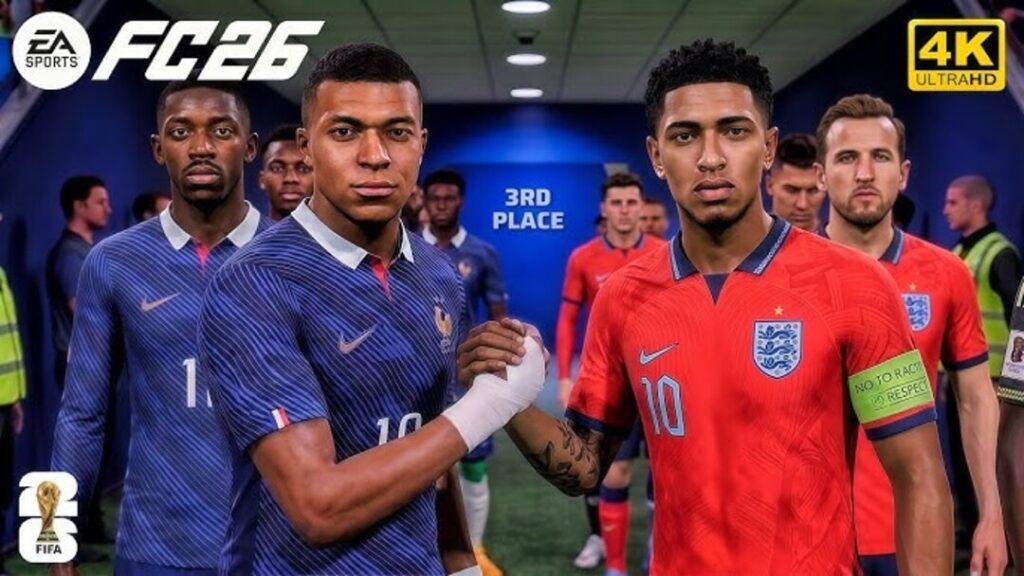
The 47-Nation Field Is the Real Upgrade
Forty-seven participating associations makes this the biggest eEURO yet. Scale does not guarantee relevance, but it creates more national entry points.
A viewer who does not follow FC Pro rankings may still care when a player represents Denmark, England, France, Spain or a smaller association. The shirt gives the contest context before the viewer understands every player, tactic or competitive history.
The format also gives smaller markets a route into the conversation. National qualifiers can create federation promotion and country-specific storylines that a global club tournament often struggles to produce.
| Decision factor | eEURO 2026 approach | Why it matters |
|---|---|---|
| Participation | 47 national associations | Creates broader European reach |
| Selection | National or managed qualifiers | Gives countries an entry story |
| Group stage | Swiss, then double elimination | Rewards consistency before knockout pressure |
| Finals | Eight nations, single elimination | Keeps the title race easy to follow |
| Reward | FC Pro World Championship Play-Ins place | Links eEURO to the wider pro circuit |
The strongest line is the last one. Winning eEURO is not designed to exist in a separate competitive bubble.
The October Group Stage Is Where the Format Gets Serious
Every participating national team is scheduled to compete online October 17–18, with only eight nations advancing to London. Day one uses a Swiss format; day two shifts into a double-elimination knockout structure.
That is a smart compromise. Swiss play reduces the chance that one early loss destroys a contender, while double elimination adds pressure once the field has been sorted.
Anders Vejrgang Gives eEURO a Champion Everyone Can Chase
A national competition needs a recognizable standard-bearer, and Denmark already has one. Anders Vejrgang won the first two editions of eEURO, giving 2026 an obvious question: can anyone finally remove Denmark from the top?
That dominance helps the event. Esports tournaments become easier to follow when there is a champion to measure everyone else against. Vejrgang gives newcomers a name to remember and rival nations a target.
It also makes qualification more meaningful. A new representative is not merely trying to survive Europe; that player may eventually have to face one of EA SPORTS FC’s most established winners wearing Denmark’s colors.
Broadcast Quality Will Matter as Much as the Bracket
The final takes place December 12 at BBC Studios in London, with eight nations in a single-elimination bracket seeded through FC Pro rankings. UEFA says the Finals will stream across UEFA and EA YouTube channels, UEFA TikTok and EA Twitch.
That distribution is broad, but reach is not retention. Football esports still has to make matches readable for people who do not study the competitive meta. Commentary, national presentation and player storytelling will matter as much as technical execution.
National Identity Is eEURO’s Biggest Opportunity
The next signals are straightforward: how strongly associations promote their selection events, whether recognizable FC Pro stars reach October, how much attention smaller nations generate, and whether the London field produces rivalries that last beyond one weekend.
All stages will be played in Ultimate Team mode, with FC Pro Draft used at the Finals. The FC Pro ecosystem pathway adds real stakes because the champion earns qualification into the FC Pro World Championship Play-Ins.
The risk is that eEURO becomes technically important but culturally narrow—a polished tournament watched mostly by people who already follow FC Pro. The opportunity is much larger. Forty-seven national associations can give football gaming a structure that looks instantly familiar to traditional football supporters.
That is why UEFA eEURO 2026 qualification matters before a champion is crowned. If national selection creates real local interest and the October field turns those flags into personalities and rivalries, eEURO could become the rare EA SPORTS FC event that does not need an esports fan to understand why winning matters.