

AI smart glasses are no longer a distant gadget fantasy built for trade-show demos and early adopters. With Google, Samsung, Xreal, and major eyewear brands pushing harder into face-worn AI, the next wearable battle is starting to look less like a smartwatch upgrade and more like a fight over how people will use their phones without touching them.
The timing matters because the smartphone has become both indispensable and exhausting. Everyone wants faster navigation, easier translation, instant photo capture, smarter notifications, and hands-free help. The challenge is whether glasses can deliver those things without becoming expensive, awkward, or socially uncomfortable.
AI Smart Glasses Are Really a Smartphone Interface War
The biggest misconception about AI smart glasses is that they are trying to replace the phone immediately. They are not. The more realistic first wave is about moving the most frequent phone interactions closer to your eyes, ears, and voice.
That is a very different proposition. A pair of glasses does not need to run every app, replace a full screen, or handle every task to become useful. It only needs to remove friction from the moments when pulling out a phone feels slow, unsafe, rude, or inconvenient.
Think about walking through a city, translating a sign, checking a message, asking for directions, capturing a quick photo, or getting a summary without staring down at a screen. Those are small interactions, but they happen constantly. If glasses can handle them well, they become a companion device rather than a novelty.
That is why the market is suddenly more serious. The real product category is not “computer on your face.” It is ambient phone control with AI as the interface.
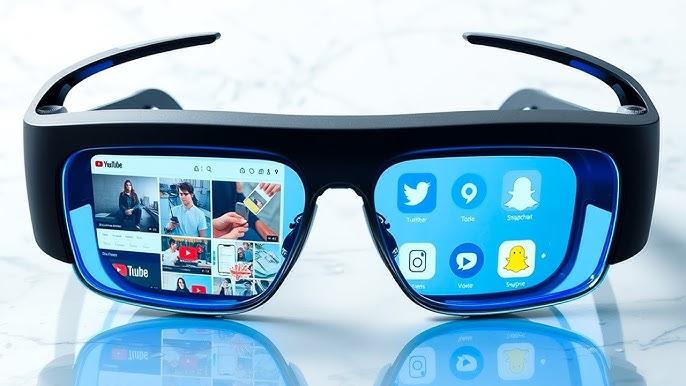
Google and Samsung Are Betting on Familiar Frames First
The most important shift in the 2026 push is design discipline. Tech companies appear to understand that smart glasses cannot look like science projects if they expect mainstream buyers to wear them in public.
Google’s Android XR eyewear preview points toward two early paths: audio glasses that provide spoken help and display glasses that show information when needed. The first wave leans into familiar eyewear from Gentle Monster and Warby Parker, with Gemini positioned as the assistant that can help with directions, texts, photos, translations, and app-connected tasks.
That matters because smart glasses have a social problem before they have a software problem. People may tolerate bulky headsets at home, but they will not wear strange-looking glasses all day just because the feature list is impressive. Comfort, style, weight, battery behavior, and camera visibility will shape adoption as much as AI performance.
Samsung’s role also raises the stakes. A phone-connected eyewear strategy makes sense for a company already invested in smartphones, watches, earbuds, and XR hardware. If glasses become another device in that ecosystem, the buyer does not need to imagine a new computing life. They only need to see why the glasses are worth adding to the devices they already carry.
Xreal Shows the Other Side of the Wearable Split
Google and Samsung’s audio-first strategy is only one half of the story. Xreal is pushing a more immersive version of smart glasses, where the display experience matters as much as the assistant.
Xreal’s Project Aura showcase highlights wired XR glasses built around Android XR, Gemini integration, spatial navigation, video, immersive YouTube experiences, multitasking screens, and developer access. That is a different buyer promise. Instead of asking people to wear glasses all day for quick AI help, it asks whether glasses can become a portable screen, workspace, entertainment device, and spatial computing tool.
This split is important because “smart glasses” is becoming too broad a label. Audio-first glasses, camera glasses, display glasses, XR glasses, and full mixed-reality headsets may all sit near each other in the market, but they solve different problems.
A commuter may want subtle audio glasses. A creator may want quick capture. A remote worker may want portable display space. A developer may want spatial computing. A traveler may want translation and navigation. One product will not satisfy every use case.
That is why buyers should avoid thinking of AI eyewear as a single category. The better question is: what job should the glasses do?
| Buyer Need | Best-Fit Glasses Type | Main Advantage | Main Risk |
|---|---|---|---|
| Hands-free messages and directions | Audio AI glasses | Lightweight, familiar, easier to wear daily | Limited visual output |
| Translation and travel help | Camera/audio AI glasses | Useful in real-world moments | Privacy concerns may limit comfort |
| Portable screen and media | Display XR glasses | Bigger virtual workspace or entertainment screen | Less practical for all-day wear |
| Creative capture | Camera smart glasses | Fast first-person photos or video | Social acceptance and recording concerns |
| Work and productivity | Display-focused XR glasses | Multitasking and spatial workspace potential | Price and app support may be uneven |
The key takeaway is that use case beats hype. A buyer who wants quiet notification help should not shop the same way as someone who wants a wearable monitor.
The Camera Problem Will Decide Public Trust
Every serious smart glasses conversation eventually reaches the same uncomfortable point: cameras on faces change the room.
A phone camera is visible because the user has to raise the device. Glasses are different. Even when companies add indicator lights, sounds, or software limits, people around the wearer may still wonder when they are being recorded, photographed, scanned, or analyzed.
That does not make AI glasses doomed. It does mean trust has to be engineered into the product, not bolted on later. Clear recording indicators, transparent controls, local processing where possible, obvious privacy settings, and social norms will matter.
This is where tech companies often underestimate the challenge. A feature that feels magical to the wearer can feel invasive to everyone else. Navigation, translation, and hands-free messaging are easier to accept. Always-available cameras and context-aware AI will require more careful handling.
The winning products will not simply be the smartest. They will be the ones people feel comfortable wearing around friends, coworkers, strangers, and children.
The Price Problem Could Slow the First Wave
Even if the technology works, early AI smart glasses may still face a familiar premium-gadget problem: the first products often cost more than casual buyers are ready to pay.
That matters because smart glasses are not replacing the phone yet. They are more likely to sit beside the phone, smartwatch, and earbuds. For many people, that makes them an accessory, not a necessity. If the price feels too close to a phone or laptop upgrade, the value case becomes harder.
The strongest early buyers will be people with specific pain points: frequent travelers, commuters, creators, accessibility-focused users, developers, productivity enthusiasts, and gadget buyers who already live inside a connected device ecosystem. Casual users may wait until the hardware is cheaper, slimmer, and more clearly useful.
This is also where the Apple-and-Samsung rivalry becomes relevant. As interest in Apple glasses and Samsung’s race for the future grows, buyers may hesitate before committing to a first-generation product from any one ecosystem. Nobody wants to buy expensive glasses months before a more polished competitor arrives.
That hesitation could slow adoption, but it may also force better products. A crowded race can push companies to improve design, battery life, privacy controls, and app support faster than a single-company experiment.
The Signals That Matter More Than Launch Hype
The next phase will not be decided by flashy demos. It will be decided by ordinary behavior.
Do people keep the glasses on after the demo ends? Do they use voice commands in public without feeling awkward? Do translation and navigation work reliably enough to trust? Does the battery last through real use? Are the frames comfortable after hours, not minutes? Do apps feel natural, or do they feel like phone features squeezed into eyewear?
Developers are another signal. If Android XR becomes a serious platform for apps, utilities, and spatial experiences, display-focused glasses could become more than a video accessory. If developers hesitate, the first wave may rely too heavily on built-in assistant features.
Retail matters too. Eyewear is personal in a way phones are not. Fit, face shape, prescription lenses, style, and comfort all affect the buying decision. That is why partnerships with eyewear brands are not cosmetic. They are central to whether these devices can move beyond tech fans.
The most important pressure point is daily habit formation. Smart glasses will win only if they become useful before they become annoying.
AI smart glasses have a real opening in 2026 because phones are powerful but attention-draining, and people are ready for faster ways to interact with information. The opportunity is enormous, but so is the risk: if the first wave feels too expensive, too limited, or too intrusive, buyers may treat the category as another wearable experiment. The brands that succeed will be the ones that make the technology disappear into normal life, not the ones that simply put the loudest AI pitch on a pair of frames.