

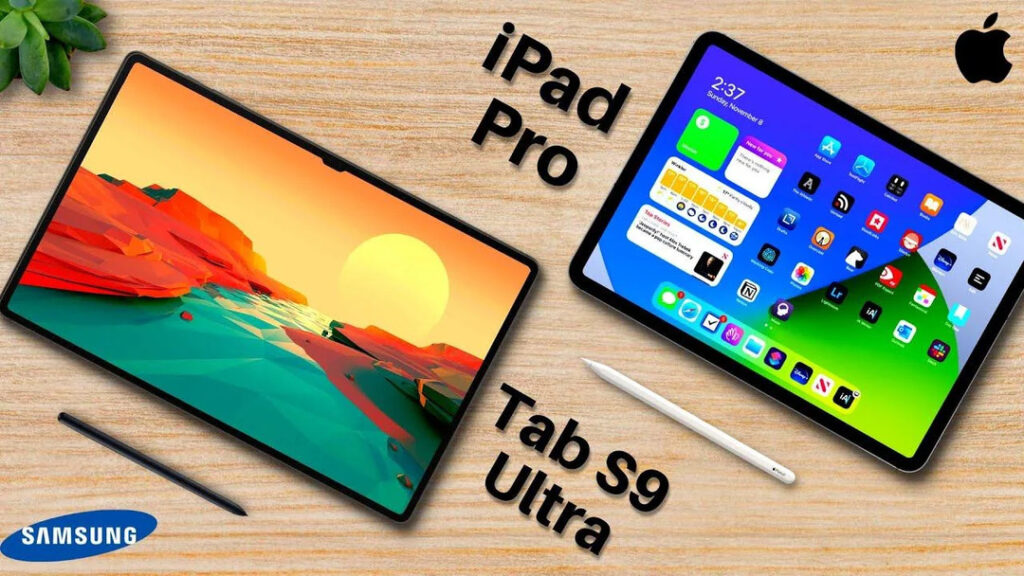
In today’s rapidly evolving tech landscape, tablets have moved far beyond casual media consumption. They’ve become powerful tools for productivity, creativity, and even professional work. That’s why the comparison between the Apple iPad Pro (M2) and the Samsung Galaxy Tab S9 is more relevant than ever.
I’ve spent time analyzing both devices from a real-world perspective, and this isn’t just about specs it’s about which tablet actually delivers the best experience depending on how you use it.
Design and Build Quality: Premium Meets Practical
When I first handled both tablets, the difference in design philosophy was immediately clear.
The iPad Pro leans toward a minimalist, ultra-premium aesthetic. Its aluminum body feels incredibly refined, and the thin bezels make it look modern without trying too hard. Apple’s attention to detail is evident in every edge and finish.
On the other hand, the Galaxy Tab S9 takes a slightly more practical approach. It still feels premium, but Samsung adds something Apple doesn’t IP68 water and dust resistance. That alone gives it an edge for users who want durability alongside elegance.
From a build perspective, both are top-tier. But if you value rugged versatility, Samsung quietly pulls ahead.
Display Performance: OLED vs Mini-LED Excellence
This is where things get interesting.
The iPad Pro features Apple’s Liquid Retina XDR display (Mini-LED) on the larger model, delivering exceptional brightness and contrast. It’s particularly strong in HDR content and professional editing, where color accuracy matters most.
Meanwhile, the Galaxy Tab S9 uses a Dynamic AMOLED 2X display, which produces deep blacks and vibrant colors that feel more immersive for everyday use especially for streaming and gaming.
From my experience:
- The iPad Pro is better for precision work and color accuracy
- The Tab S9 feels more cinematic and visually striking
Neither display is objectively “better” they excel in different scenarios.
Performance and Power: Desktop-Class vs Android Flexibility
Performance is one of the biggest deciding factors in this comparison.
The iPad Pro is powered by Apple’s M2 chip, the same silicon used in laptops. That means you’re getting desktop-level performance in a tablet form. Multitasking, video editing, and heavy apps run effortlessly.
Samsung’s Galaxy Tab S9 runs on the Snapdragon 8 Gen 2 for Galaxy, which is fast and efficient but not quite at the same level as the M2.
In real-world usage:
- The iPad Pro feels unmatched for creative professionals
- The Tab S9 is more than powerful enough for 95% of users
If you’re pushing limits editing 4K video or running complex apps the iPad Pro dominates. Otherwise, the difference may not be noticeable.
Software Experience: iPadOS vs Android
Software is where the gap becomes more about preference than performance.
Apple’s iPadOS is polished, stable, and deeply integrated into its ecosystem. If you already use a Mac or iPhone, the experience feels seamless. Features like Stage Manager and app optimization make it ideal for productivity.
Samsung’s Android-based experience, enhanced with DeX mode, offers something unique a desktop-like interface. You can open multiple windows, resize apps, and use it almost like a laptop.
From my perspective:
- iPadOS = clean, optimized, and reliable
- Samsung DeX = flexible, customizable, and closer to a PC experience
Accessories and Productivity
Accessories can completely transform a tablet, and both brands take this seriously.
Apple’s Magic Keyboard and Apple Pencil (2nd Gen) are among the best in the industry. The typing experience is excellent, and the Pencil remains unmatched for artists and designers.
Samsung includes the S Pen in the box, which immediately adds value. It’s responsive, precise, and doesn’t require an extra purchase. Pair that with keyboard accessories, and the Tab S9 becomes a strong productivity device.
This is one area where Samsung offers better out-of-the-box value, while Apple delivers premium refinement at a higher cost.
Battery Life and Everyday Use
Battery performance is solid on both devices, but their behavior differs slightly.
The iPad Pro is optimized for efficiency, often lasting a full day under moderate use. Apple’s ecosystem ensures apps are well-optimized, which helps conserve power.
The Galaxy Tab S9 also delivers strong battery life, especially for streaming and browsing. However, heavy multitasking in DeX mode can drain it faster.
In practical terms, both tablets are reliable but Apple’s optimization gives it a slight edge.
Price and Where to Buy
Pricing plays a huge role in this decision.
💰 Apple iPad Pro (M2)
- Starting at: $799 (11-inch) / $1,099 (12.9-inch)
- Buy here:
💰 Samsung Galaxy Tab S9
- Starting at: $799
- Buy here:
Final Verdict: Which Tablet Should You Choose?
After comparing both devices in depth, it’s clear that this isn’t about one being universally better—it’s about what you need from a tablet.
If you’re a creative professional, video editor, or Apple ecosystem user, the iPad Pro is hard to beat. Its performance, software optimization, and accessory ecosystem make it the most powerful tablet available today.
If you want flexibility, better value, and a more laptop-like experience, the Galaxy Tab S9 stands out. It’s versatile, durable, and offers features Apple simply doesn’t like DeX and water resistance.
⭐ RAVE-TECH Final Scores
- iPad Pro (M2): 9.5 / 10
👉 Best for power users, creators, and long-term performance - Samsung Galaxy Tab S9: 9.0 / 10
👉 Best for versatility, value, and everyday productivity
Two Titans, One Smart Choice
Looking at the bigger picture, both tablets represent the peak of their respective ecosystems. The iPad Pro pushes boundaries in performance and creative workflows, while the Galaxy Tab S9 redefines what a flexible Android tablet can be.
If there’s one takeaway I’d emphasize, it’s this:
You’re not choosing the better tablet you’re choosing the better experience for your needs.
And in 2026, that’s exactly how great technology should be.