
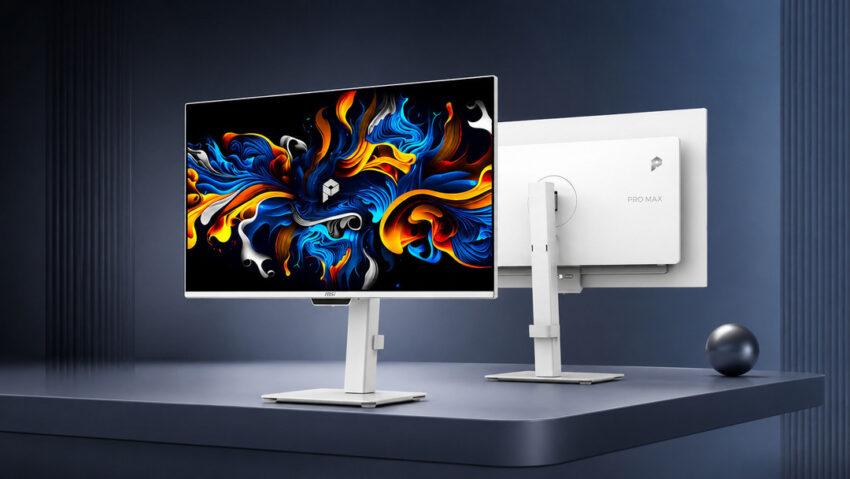
Inkjet-printed OLED monitor technology has moved from display-industry promise to a product gamers can actually point to. MSI’s PRO MAX OLED 271UPJW12 is not the fastest OLED screen announced in 2026, but its 27-inch 4K panel, RGB-stripe layout, and different manufacturing method could matter more than another jump in refresh rate.
That makes the MSI screen more useful as a signal of where OLED is heading than as a one-off product review. Gamers comparing today’s high-refresh OLED options, including 360Hz QD-OLED gaming, should pay attention to what changes when panel makers attack cost, text clarity, and manufacturing scale instead of chasing speed alone.
MSI’s Inkjet-Printed OLED Monitor Is Built Around a Different Tradeoff
MSI announced the PRO MAX OLED 271UPJW12 on August 2, calling it the world’s first 27-inch 4K 120Hz inkjet-printed OLED display. Its specifications include 164 pixels per inch, 99% DCI-P3 coverage, Delta E of 2 or lower, DisplayHDR True Black 500 certification, and claimed HDR peaks up to 1,000 nits.
Those numbers do not position it as an esports-first monitor. A 120Hz ceiling is modest beside much faster OLED models aimed at competitive players. Instead, MSI is combining OLED contrast with high desktop pixel density, strong color targets, and a subpixel structure intended to behave more like a familiar LCD.
MSI’s new display specifications suggest a different premium path: make OLED better suited to mixed gaming, work, creation, and everyday desktop use.
A simple comparison makes the product’s role clearer:
| Feature | PRO MAX OLED 271UPJW12 | Why It Matters |
|---|---|---|
| Panel method | Inkjet-printed OLED | Opens a different OLED manufacturing path |
| Size and resolution | 27-inch, 4K | High clarity at a mainstream desktop size |
| Refresh rate | 120Hz | Smooth gaming, but not esports-first |
| Subpixel layout | RGB Stripe | Targets cleaner text and fine UI detail |
| Color coverage | 99% DCI-P3 | Useful for gaming and creative work |
| HDR | True Black 500, up to 1,000-nit peak | Retains a major OLED visual advantage |
This is not trying to replace every ultra-high-refresh gaming display. It is testing whether a different OLED production method can support a more versatile monitor without giving up OLED’s core strengths.
RGB Stripe Could Fix One of OLED’s Everyday Annoyances
OLED monitors can look spectacular in games while still exposing weaknesses on the desktop. Nontraditional subpixel layouts used by some OLED panels can produce color fringing around fine text, icons, or high-contrast interface elements.
MSI says its optimized RGB Stripe arrangement closely resembles the uniform RGB structure used by traditional LCD panels. Combined with 164 PPI, that should provide a strong foundation for sharper text and cleaner fine detail, although independent testing is still needed.
For gamers who also work, stream, edit video, or keep browser and chat windows open for hours, desktop clarity matters. A display can render dark game scenes beautifully and still feel compromised if small text looks rough during the rest of the day.
Inkjet Printing Matters Because OLED Still Has a Cost Problem
The manufacturing method is the bigger story. Inkjet-printed OLED uses high-precision printing to create its self-emissive RGB elements rather than relying on the metal-mask approach used in other OLED manufacturing processes.
TCL CSOT has spent years developing the technology and previously described its printed OLED manufacturing as avoiding metal masks and potentially reducing production costs compared with traditional display techniques. That does not mean MSI’s first monitor will automatically be inexpensive; early products rarely reveal the full savings a mature manufacturing process may eventually produce.
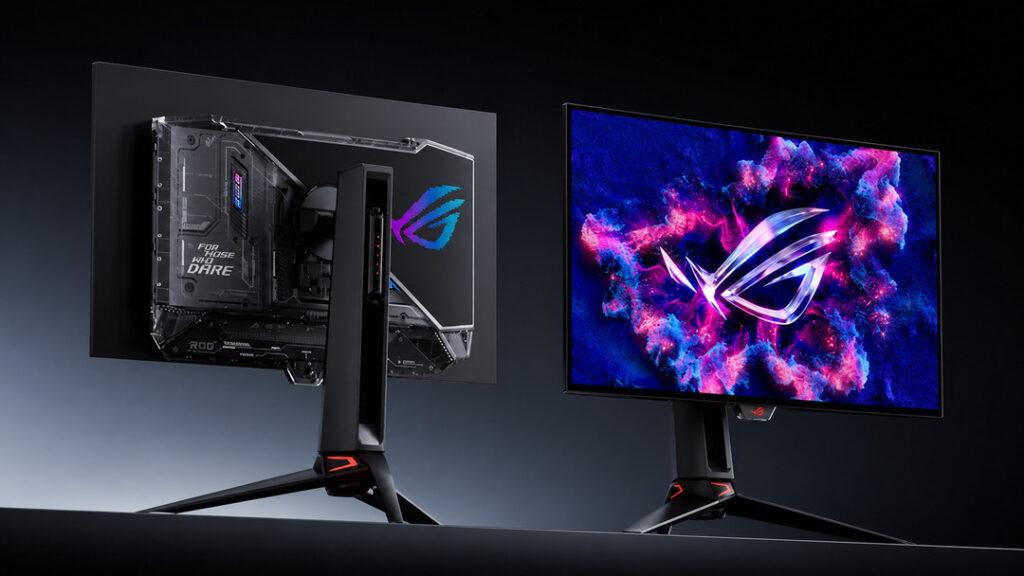
Still, manufacturing efficiency is the real prize. Premium 4K OLED gaming monitors remain expensive enough that buyers routinely compare them with fast IPS and Mini LED alternatives. A second viable production route could add price pressure through both lower production costs and greater competition among panel suppliers.
A Cheaper Panel Does Not Guarantee a Cheap Gaming Monitor
Gamers should be cautious about turning manufacturing potential into a price prediction. MSI did not announce a retail price or firm shipping date in its August 2 release, and current coverage of the model still lists those details as unknown.
Panel cost is only part of a finished monitor. Electronics, ports, calibration, coatings, warranty coverage, stands, distribution, and brand positioning all affect the final number. MSI also lists KVM support, Picture-in-Picture, Picture-by-Picture, an adjustable stand, and USB-C with 15W power delivery.
That makes the first IJP OLED monitor a technology demonstrator as much as a value play. Price will decide the impact. If it lands close to comparable QD-OLED and WOLED products, buyers may see IJP mainly as another panel option. A meaningfully lower price would make the manufacturing story much harder to ignore.
Refresh Rate Is the Compromise Gamers Need to Understand
A 120Hz 4K OLED can still make sense for single-player titles, console gaming, strategy games, and mixed-use setups. Competitive players targeting very high frame rates will have obvious reasons to prefer faster panels.
The 271UPJW12 is not evidence that 120Hz beats 360Hz or 500Hz. Its significance is that IJP OLED could eventually move into faster panels if the technology proves itself in consumer monitors.
Buyers should separate this monitor from this technology. One product has a specific refresh-rate ceiling and feature set. Inkjet printing is a manufacturing platform that could spread into very different monitor classes later.
Pricing, Availability, and Faster Panels Are the Next Tests
Three developments will show whether IJP OLED becomes a genuine gaming-monitor shift: MSI’s actual retail price, independent testing of the panel, and the arrival of more IJP models across different brands and refresh rates.
Testing should focus on brightness behavior, text quality, uniformity, motion performance, and long-term image retention. MSI’s OLED Auto Care is also relevant because the company says Data Counting Compensation can operate in the background instead of interrupting use with protection prompts.
The first inkjet-printed OLED monitor does not need to become 2026’s best gaming display to matter. Its real test is whether a new production method can preserve OLED’s visual strengths while improving text behavior, widening supplier competition, and eventually lowering the cost of entry. If that happens, MSI’s 120Hz screen may be remembered less for its own spec sheet than for the monitor generation it helped start.
FAQs
What is an inkjet-printed OLED monitor?
An inkjet-printed OLED monitor uses precision printing to deposit OLED materials during panel manufacturing. The approach can simplify parts of production while still allowing self-emissive pixels and separate RGB subpixels.
Is the MSI PRO MAX OLED 271UPJW12 a gaming monitor?
It can handle gaming with its 4K resolution, 120Hz refresh rate, and OLED panel, but its specifications favor mixed productivity and entertainment rather than the extreme refresh rates sought by competitive esports players.
Will inkjet-printed OLED monitors be cheaper?
Potentially, but lower panel-production costs do not guarantee lower retail prices. MSI has not announced pricing for the 271UPJW12, so the first consumer model will be an important test of that advantage.