

GTA VI microtransactions have become one of the clearest consumer-facing questions around Rockstar’s next release, not because the single-player campaign is expected to sell power or cosmetics, but because Rockstar’s reported launch stance cuts against a broader AAA market pattern. The research notes state that Grand Theft Auto VI is scheduled for November 19, 2026, and that its single-player campaign will launch without real-money purchases or generative AI assets. That is a meaningful claim for players, but it should be read with boundaries: it applies to the campaign at launch, not every possible post-launch mode, service, or policy change.
The anticipation is already measurable. The Washington Post reported that Newzoo estimated GTA VI had about 4.6 million pre-orders by August 28, 2026, and projected launch-week revenue between US$3.3 billion and US$5.2 billion Washington Post report. Those estimates are still forecasts, not sales results. Even so, they show why players are scrutinizing monetization and production claims before release rather than waiting until after purchase.
GTA VI microtransactions and Campaign Spending
Why GTA VI microtransactions Matter To Players
The campaign claim is straightforward in the research notes: Rockstar North co-studio head Rob Nelson reportedly said on August 27, 2026, that the single-player campaign would launch without microtransactions of any kind. The notes also say that vehicles, weapons, cosmetics, and gameplay content in that campaign would be earned through play rather than bought with real money. For players who treat Grand Theft Auto primarily as a single-player crime sandbox, that distinction matters more than any launch trailer beat.
GTA VI microtransactions are not just a billing detail. They shape how players judge progression pacing, item access, mission rewards, and whether a full-price release is trying to sell relief from its own grind. A campaign without paid shortcuts is easier to evaluate as a traditional packaged game. If the reported policy holds at launch, buyers can assess the campaign on design quality, technical performance, story, and world density without needing to factor in a store layered on top of the single-player experience.
That does not answer every monetization question. The research notes specify that Rockstar has not clarified whether GTA Online, or any live-service component tied to GTA VI, will follow the same policy. That gap is not a minor footnote. Grand Theft Auto V’s long tail was strongly connected to online play, and players should separate campaign assurances from online business models until Rockstar states otherwise. For readers tracking the claim history, our related GTA VI claim review covers the same issue from a narrower monetization angle.
Campaign Claims Are Not Online Commitments
A cautious reading protects consumers from overextending the announcement. A no-purchase campaign at launch does not necessarily mean a no-purchase ecosystem. It also does not prove that future expansions, online economies, battle-pass-style systems, or premium currency plans are off the table. None of those have been confirmed in the supplied research, so they should not be treated as facts.
The practical advice is simple: judge the campaign and online components separately. If a player intends to buy GTA VI mostly for story content, the reported campaign policy is encouraging. If a player’s main interest is online progression, social play, or post-launch updates, the unanswered monetization questions remain relevant until Rockstar provides explicit terms for that mode.
No Generative AI Assets Is A Production Claim
What Rockstar And Take-Two Said About AI
The AI claim has two layers in the research. On February 5, 2026, Take-Two CEO Strauss Zelnick said that “generative AI has zero part in what Rockstar Games is building” for GTA VI, and described the game worlds as built “building by building, street by street,” not procedurally generated, according to ESPN’s report. The research notes also state that Nelson later said no generative AI assets were used in GTA VI’s development.
Those claims are unusually specific for a major blockbuster release in 2026. They are also relevant because generative AI use in games can raise questions about labor, authorship, asset consistency, legal risk, and player trust. Rockstar’s reported position gives fans a clearer production narrative: the world is being presented as authored and handcrafted rather than assembled through generative systems.
That said, a production claim is not the same as a public technical audit. Players outside Rockstar cannot independently inspect every asset pipeline, toolchain, or outsourcing step. The safer consumer reading is that Rockstar and Take-Two have made on-the-record statements rejecting generative AI use for GTA VI’s launch content, and those statements will shape expectations until the game ships on November 19, 2026.
Why The AI Wording Needs Precision
There is a difference between “no generative AI assets,” “no procedural generation,” and “no AI at all.” Games have used non-generative AI systems for decades, including enemy behavior, traffic routines, NPC reactions, pathfinding, and simulation logic. The research notes concern generative AI assets and world-building claims, not every form of software-driven behavior inside the game.
That distinction matters because vague AI language can mislead buyers in both directions. Some marketing uses AI as a premium buzzword. Some community discussions use it as a blanket criticism. A careful reading asks what was generated, what was authored, what tool was used, and whether any claim applies to art, dialogue, animation, code, systems, or live-service moderation. The supplied research supports a narrow conclusion: GTA VI’s launch campaign is being positioned as handcrafted, not generated through generative AI asset creation.
Anticipation Is Now A Market Signal
Pre-Orders Show Demand, Not Quality
The pre-order data in the research points to rare market scale. Newzoo’s projected launch-week revenue range and the reported 4.6 million pre-orders by August 28, 2026, indicate extraordinary demand before release. The notes also cite estimates of roughly US$180 million spent during the first week of digital pre-orders across the United States and five major European markets, with a global estimate near US$260 million. Those numbers are estimates, and they should not be confused with verified lifetime sales.
Demand can be a useful signal, but it is not a quality guarantee. High pre-order activity often reflects brand strength, marketing reach, platform availability, and cultural momentum. It does not prove that performance, mission design, accessibility settings, online stability, or value for money will meet every player’s expectations. For a release this large, players should treat anticipation as context rather than evidence that every part of the product has been settled.
That is especially true because GTA VI is still unreleased as of September 14, 2026. Reviews, console performance analysis, accessibility breakdowns, online service terms, and post-launch support details were not part of the supplied research. Until those are available, the strongest supported claims concern release timing, reported campaign monetization policy, AI asset statements, and pre-order momentum.
Community Pressure Is Part Of The Story
Player scrutiny is not noise. It is a normal response to a massive entertainment release that may set expectations for other publishers. If a game projected to generate several billion dollars in launch-week revenue can ship its campaign without real-money purchases, that may influence how players judge monetization in other premium AAA titles. The comparison will not be perfect, because GTA VI has unusual brand power and budget scale, but the consumer expectation is easy to understand: a full-price campaign should not need a cash shop to feel complete.
For broader player trend tracking across the same network, MostPlays offers insights into the shifting dynamics of gaming culture and community engagement. This additional context helps underscore that GTA VI represents not only a product launch but also a critical assessment of trust in publisher declarations before release.
Storefront Labels Still Need Consumer Caution
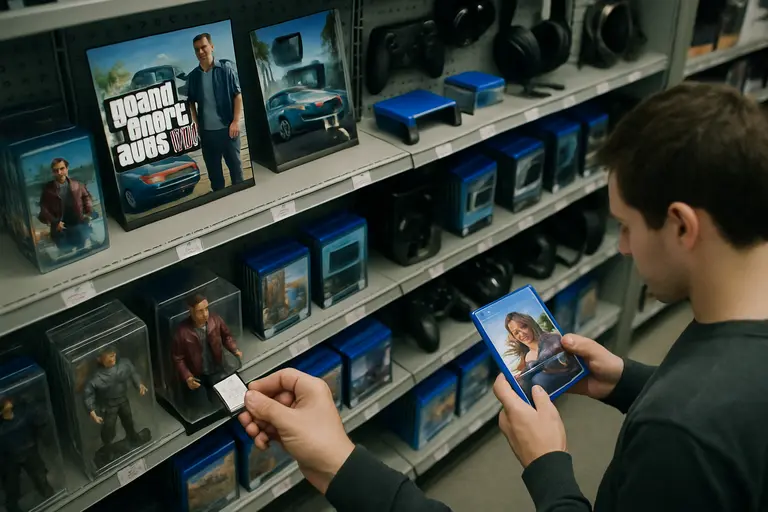
Optional Purchase Labels Can Be Broad
The research notes say that PlayStation and Xbox product pages still listed optional in-game purchases around August 27–28, 2026, despite the reported no-microtransaction statement for the single-player campaign. That is not necessarily a contradiction. Storefront labels can apply broadly to a product, edition, connected service, online mode, virtual currency, add-on path, or future content plan. Without platform-specific wording in the supplied research, the safest interpretation is that the label creates uncertainty rather than disproves the campaign claim.
GTA VI microtransactions should therefore be assessed by mode and purchase path. A storefront warning may be useful consumer information even if the campaign launches cleanly. It may also reflect platform compliance language that is broader than the single-player feature set. Players who are sensitive to in-game spending, especially parents buying for younger users, should check the product page again near November 19, 2026, and review console account controls before purchase.
Digital Ownership Details Also Matter
The research notes state that GTA VI is scheduled for PlayStation 5 and Xbox Series X|S, and that a physical box release contains a digital download code rather than a disc. That detail has a practical impact for collectors, second-hand buyers, households with data caps, and players who prefer disc-based installation or resale options. A box with a code is not the same consumer proposition as a disc, even if both are sold through retail channels.
That detail also reinforces why pre-order enthusiasm should be paired with basic purchase checks. Buyers should confirm platform, edition, storage requirements, refund rules, account region, and whether the copy is code-based before committing. None of those checks require cynicism. They are normal precautions for a high-price entertainment purchase tied to platform accounts and digital access rules.
GTA 6 Anticipation And Launch Claims
What Buyers Can Reasonably Take From The Claims
The strongest supported reading is that Rockstar and Take-Two are trying to separate GTA VI’s campaign from two controversial AAA trends: paid single-player progression and generative AI asset production. If the reported policy holds on November 19, 2026, the campaign will arrive with a clearer value proposition than many players feared. GTA VI microtransactions would remain an online-mode question rather than a campaign purchase concern.
That still leaves key information unresolved. The research does not confirm online monetization terms, post-launch content pricing, long-term update policy, review performance, or how storefront labels will read at release. It also does not prove that pre-order estimates will convert into satisfied buyers. For now, the most reasonable stance is guarded optimism: the reported campaign decisions are positive for consumer trust, while the unanswered online and storefront questions deserve continued attention before launch day.