

Samsung gave the Galaxy Watch Ultra2 the kind of number that dominates launch graphics: a display capable of reaching 5,000 nits. That brightness is impressive, but the Galaxy Watch Ultra2 battery may decide whether this expensive outdoor watch becomes a dependable training tool or another feature-heavy device that spends too much time on a charger.
The decision sits inside a wider argument about smartwatches and health trackers: how much hardware should someone wear, charge and trust to interpret daily performance?
The Galaxy Watch Ultra2 Battery Is the Headline Upgrade
Samsung has installed an 800mAh battery, a 35% capacity increase over the previous Ultra model. The company claims up to 60 hours of use with the always-on display enabled and has introduced fast charging that can restore about 40% in roughly 30 minutes.
Those figures matter more than another AI summary. Outdoor watches succeed when users can record a long run, track sleep and begin the next day without reorganizing life around a cable.
The new Ultra2 hardware package also uses Qualcomm’s Snapdragon Wear Elite platform and dual-frequency GPS. Samsung is promising faster performance and more precise location tracking, both of which can increase the watch’s practical value—but also create battery demands that raw capacity alone does not explain.
Capacity is not endurance. Real results will depend on screen behavior, LTE use, GPS duration, background health measurements and how aggressively the software manages power.
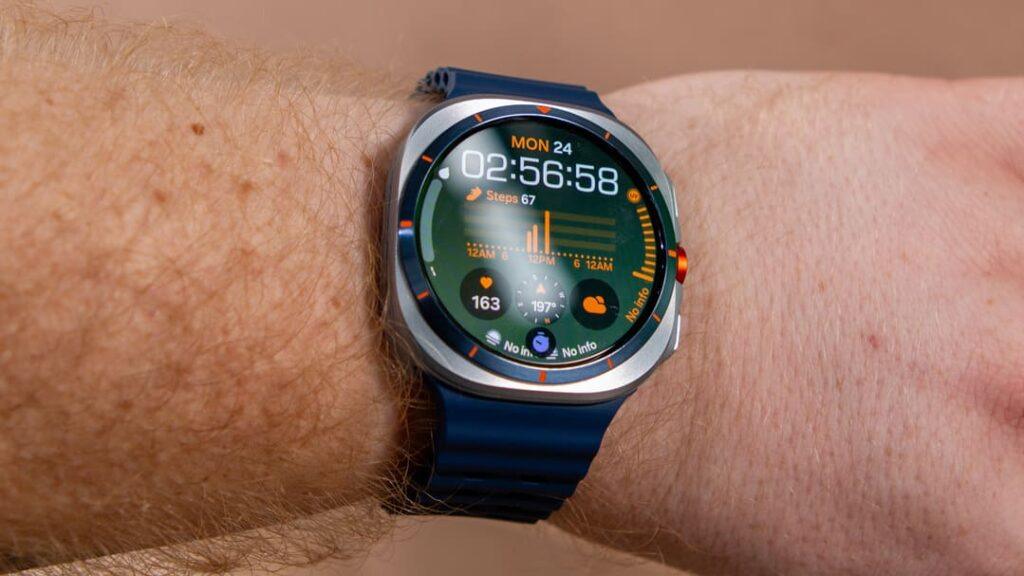
A 5,000-Nit Display Solves a Specific Problem
Extreme brightness is useful when a runner checks pace under direct midday sun or a diver needs readable depth information beneath reflective water. Samsung’s Ultra2 display and dive specifications pair the 1.52-inch screen with a Depth app that shows current depth, elapsed time and water temperature.
That is a legitimate use case, not showroom theater. Yet peak brightness is not sustained brightness. Most users spend more time indoors or glancing at notifications than navigating sunlit trails.
The question is whether automatic brightness delivers visibility only when needed. Overreaction wastes power; a slow response makes the headline specification less useful during a quick glance.
Readable at the right moment matters more than winning a brightness contest.
| Signal to test | Encouraging result | Warning sign |
| Mixed-use battery | Two full days with sleep tracking | Charging required before the second night |
| GPS endurance | Long activity without severe drain | Large percentage loss during a short run |
| Peak brightness | Instant readability outdoors | Heat or rapid battery loss in sunlight |
| Fast charging | Useful recovery during a shower | Advertised speed requires ideal conditions |
| Health trends | Stable multi-day patterns | Large unexplained daily swings |
| Band comfort | Secure without pressure points | Wrist fatigue during sleep or training |
Thinner Hardware Only Matters If It Wears Better
Samsung says the Ultra2 is 12% thinner and its redesigned band is 26% lighter. The watch itself remains a 47mm outdoor device, so those reductions should not be mistaken for a compact design.
Comfort is crucial because health tracking improves when the watch stays on the wrist. A bulky case can disturb sleep or move during exercise, weakening sensor contact. Case shape and wrist size matter more than percentage reductions.
The Ultra2 must pass a mundane test: can someone forget it is there? Wearability drives data quality because a watch cannot measure sleep, recovery or resting trends from a bedside table.
This is where the regular Galaxy Watch9 may be the smarter purchase. It uses the same Snapdragon platform and offers many of Samsung’s health features in 40mm and 44mm sizes. Buyers who do not dive, run trails or need maximum durability may gain more from the Watch9’s smaller shape than from the Ultra2’s adventure credentials.
Diving Credentials Make the Ultra Name More Credible
The Ultra2 carries 10ATM water resistance, an IP69K rating and EN13319 certification for diving instruments. It can automatically record depth, dive time and water temperature, with Samsung positioning it for activity down to 40 meters.
That gives the watch a clearer reason to exist. The first Ultra leaned heavily on rugged styling; the Ultra2 adds specialized functions that can matter to swimmers, recreational divers and outdoor athletes.
Certifications do not eliminate judgment. Water resistance can change with age or damage, and a smartwatch should not replace training, a dive plan or safety equipment. Buyers should check which functions are available at launch.
The strongest Ultra products are not ordinary smartwatches wearing tougher cases. They offer tools tied to demanding environments.
Garmin Still Defines the Battery Pressure
Samsung’s claimed 60 hours is competitive within full-featured smartwatches, particularly against devices built around bright displays, LTE, apps and frequent interaction. Outdoor-watch specialists operate on a different scale.
Garmin’s published fēnix 8 battery ranges stretch from days to weeks depending on model, display mode and GPS settings. Garmin also offers deeper training ecosystems and expedition-oriented power modes.
Samsung counters with stronger general smartwatch behavior: richer apps, messaging, payments, LTE and closer integration with Android phones. The Ultra2 is therefore not simply trying to beat Garmin at endurance. It is trying to make a smartwatch durable enough for serious activity without giving up everyday intelligence.
Buyers must decide which compromise hurts less: charging more often or accepting a less phone-like watch.
The First Week of Testing Will Reveal the Truth
Reviewers should monitor battery life with the always-on display, overnight tracking, dual-frequency GPS, LTE and maximum outdoor brightness. GPS accuracy under trees and around tall buildings also deserves scrutiny, as does heart-rate consistency during intervals and changes in pace.
General availability begins August 7, so early impressions should be treated cautiously. Battery optimization can change through updates, while health and recovery features require several days of baseline data before their patterns become useful.
The Galaxy Watch Ultra2 battery gives Samsung a credible foundation. If the watch can deliver two practical days, comfortable sleep tracking and dependable GPS without constant power management, the 5,000-nit display becomes a useful bonus. If endurance collapses under the very features that justify the Ultra label, the brightest specification will also expose the product’s biggest weakness.