
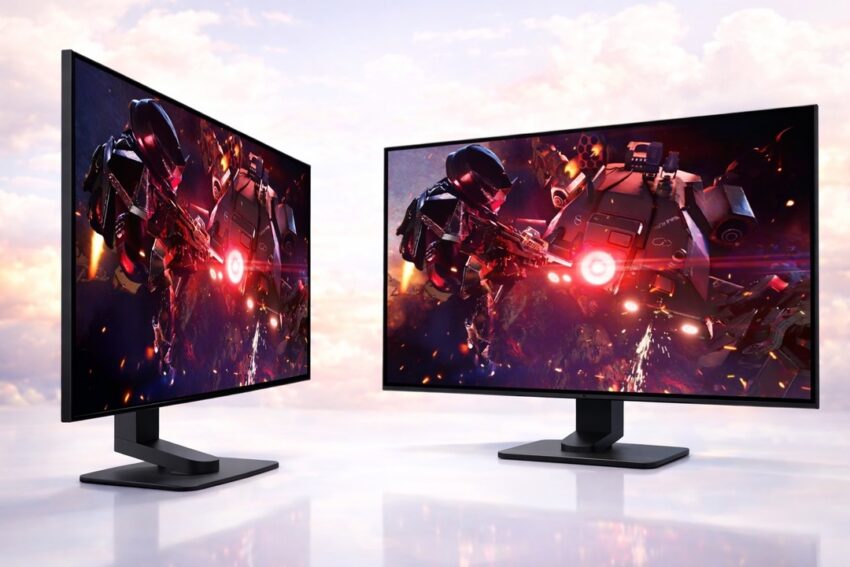
Sony is taking a very specific swing with the INZONE M10S II. This is not a general-purpose gaming monitor trying to please every type of player. It is a purpose-built, tournament-minded display designed for people who obsess over response times, motion handling, and every last competitive edge. On paper, it is one of the most aggressive esports monitors announced so far: a 27-inch OLED panel, 2560 x 1440 resolution, 540Hz refresh rate at QHD, and a 720Hz dual-mode option at 720p. Sony also says it worked with Fnatic on the design and feature set, reinforcing that this screen is aimed squarely at serious competitive gamers rather than casual buyers.
At $1,099.99, however, this is clearly a premium product. That price immediately raises the key question: is the Sony INZONE M10S II a genuine step forward in gaming monitor performance, or is it simply an expensive specification showcase? After looking at its feature set, positioning, and value, the answer is more nuanced than the headline numbers suggest.
Sony INZONE M10S II Specifications at a Glance
Before diving into the review, here is a quick overview of the core specifications.
| Specification | Sony INZONE M10S II |
|---|---|
| Screen size | 27 inches |
| Panel type | OLED |
| Resolution | 2560 x 1440 (QHD) |
| Refresh rate | 540Hz at QHD |
| Dual mode | Up to 720Hz at 720p |
| Response time | 0.02ms GtG |
| Connectivity | DisplayPort 2.1a, HDMI 2.1, USB hub |
| Special features | Anti-glare film, motion blur reduction, anti-VRR flicker, dynamic crosshair |
| Warranty | 3-year limited warranty |
| Price | $1,099.99 |
These are the headline figures Sony is using to position the monitor as a no-compromise esports display. The most attention-grabbing elements are the 540Hz native refresh rate, the 720Hz reduced-resolution mode, and the improved OLED response speed of 0.02ms.
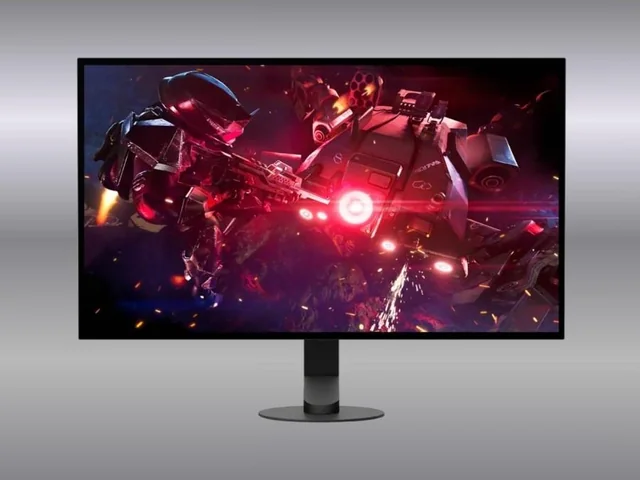
Designed for Speed First, Everything Else Second
The easiest way to understand the Sony INZONE M10S II is to view it through a competitive gaming lens. Sony is not trying to make the best all-round monitor for mixed use, content creation, console gaming, and cinematic single-player titles. It is prioritizing speed, tracking clarity, and responsiveness above almost everything else.
That approach makes sense when you look at the target audience. In esports titles such as Valorant, Counter-Strike 2, and Overwatch, elite players care deeply about motion clarity and input responsiveness. Even small improvements in perceived smoothness can matter when split-second aim corrections decide the outcome of a duel. Sony’s pitch is straightforward: the M10S II is built to help those players see and react faster.
The dual-mode concept is especially telling. Running at 720Hz in 720p is not about image quality. It is about maximizing refresh responsiveness for the narrow band of users who are willing to sacrifice sharpness for speed. That makes the M10S II feel less like a mainstream premium monitor and more like specialized equipment for highly competitive players.
The OLED Advantage Meets Extreme Refresh Rates
OLED panels already have a major reputation advantage when it comes to pixel response time. Unlike many LCD-based esports monitors, OLED can transition nearly instantaneously, which reduces smear and improves clarity in fast movement. Sony claims a 0.02ms GtG response time for the M10S II, improving on the original M10S. That is paired with a new-generation WOLED panel using Primary RGB Tandem technology, which multiple reports say improves brightness and contrast performance over older WOLED implementations.
This matters because older OLED gaming monitors could be stunning in dark-room play but less impressive in bright environments or during sustained high-brightness scenes. Sony’s newer panel choice, combined with its Super Anti-Reflection Film, suggests that it is trying to address those weaknesses and make the monitor more practical for brightly lit gaming rooms or tournament settings.
In practical terms, the M10S II’s OLED foundation is one of its strongest selling points. You are not just getting a fast refresh rate; you are getting a fast refresh rate backed by the kind of pixel behavior that makes motion look cleaner and more immediate than traditional LCD alternatives.
Motion Handling and Esports Features Are the Main Event
This is where the Sony INZONE M10S II starts to separate itself from the average premium gaming monitor. Sony has added motion blur reduction with brightness compensation, anti-VRR flicker tools, and a feature set influenced by professional player feedback. Reports also mention an improved 1080p 4:3 mode that shrinks the active display area to 24.5 inches, which mirrors the size preference many competitive players still favor.
That last point is more important than it may sound. Plenty of competitive players prefer a smaller effective screen size because it keeps more of the action within their central field of view. By supporting that use case directly, Sony is signaling that this monitor is not merely high-end hardware; it is tuned around how tournament players actually play.
A few standout inclusions are worth noting:
- 540Hz at native 1440p for extreme fluidity in supported games
- 720Hz mode at 720p for users who value raw speed over resolution
- Dynamic crosshair support and anti-flicker enhancements
- DisplayPort 2.1a and HDMI 2.1 connectivity for modern PC setups
These features give the M10S II a very sharp identity. It knows exactly what it wants to be.
Image Quality Is Strong, but This Is Not a Visuals-First Monitor
Because the M10S II uses an OLED panel at 1440p, image quality should still be quite strong in broader gaming use. OLED contrast, deep blacks, and excellent pixel response naturally help games look punchy and crisp. Reports also note that Sony’s newer panel technology brings better brightness and contrast behavior than older WOLED generations.
Still, this monitor is not best described as a visual indulgence product. It is not trying to outclass 4K OLED gaming monitors in cinematic detail, nor is it pitched primarily at creators who need color-managed workflows. Its image quality is part of the package, but the main reason to buy it is motion performance.
That distinction matters for buyers. Someone who mainly plays single-player games, watches films, and wants maximum visual immersion may find better value elsewhere. The M10S II is more about competitive efficiency than luxury display pleasure.
Price, Value, and the Biggest Drawback
The price is the hardest part of this review to ignore. Sony lists the INZONE M10S II at $1,099.99, and that immediately places it in elite territory. At that level, every strength has to be weighed against the fact that there are other OLED gaming monitors on the market with excellent performance for less money. The Verge specifically notes that Sony faces pressure from cheaper OLED gaming alternatives, including dual-mode and high-refresh competitors.
This does not make the M10S II overpriced in an absolute sense, because its specification package is exceptional. But it does make it specialized. If you cannot make meaningful use of 540Hz, and especially if you have no interest in 720Hz mode, the value proposition gets much weaker.
To benefit fully from this monitor, you also need a very powerful PC capable of driving extremely high frame rates. Without that, you are paying a premium for performance headroom you may never actually reach. That is why the M10S II feels like a product for a narrow, demanding audience rather than the broader enthusiast market.
Where You Can Buy the Sony INZONE M10S II
At the time of writing, the clearest verified purchase path is through Sony’s own store, where the product is listed at $1,099.99. Sony’s INZONE monitor catalog also shows the M10S II at the same price, although availability appears limited and some listings point to “email me when available,” suggesting rollout may still be staged depending on region.
Buy links:
I was not able to verify a widely available second major retailer listing for the M10S II specifically yet. Some large retailers currently show the earlier INZONE M10S instead, which is a different model.
Final Verdict: Who Should Buy It
The Sony INZONE M10S II is a fascinating monitor because it is so unapologetically focused. It pushes OLED esports performance to an extreme level, and from a technical standpoint it looks formidable. The 540Hz refresh rate, 720Hz dual-mode capability, 0.02ms response time, anti-glare improvements, and tournament-oriented features all point to a display made for serious competitive use.
The flip side is equally clear. At $1,099.99, this is not the right pick for most gamers. It is overkill for casual play, expensive for mixed-use setups, and too specialized for buyers who care more about all-around image quality than competitive edge.
If your goal is to extract every possible advantage in fast-paced multiplayer titles, the Sony INZONE M10S II looks like one of the most compelling gaming monitor releases in its category. If your needs are broader, there are smarter values elsewhere.
Pros and Cons
Pros
- Outstanding OLED response performance
- 540Hz at 1440p is exceptionally aggressive
- 720Hz dual-mode option is unique and highly competitive-focused
- Anti-glare and anti-flicker upgrades improve real-world usability
- Strong esports tuning with Fnatic collaboration
Cons
- Very expensive at $1,099.99
- 720Hz mode requires dropping to 720p
- Best features only matter to a narrow audience
- Demands a very high-end PC to justify the purchase
Sony INZONE M10S II Final Score
RAVE-TECH Final Score: 8.9/10
The Sony INZONE M10S II earns a high score because it delivers exactly what it promises: elite-level esports monitor performance with top-tier OLED speed and genuinely cutting-edge refresh capabilities. It loses points on value and mainstream appeal, but for competitive players chasing maximum responsiveness, it looks like one of the most serious products in the category.
If you want, I can also turn this into a more publisher-ready version with a sharper news-site tone, a shorter intro, and a title/headline package.