
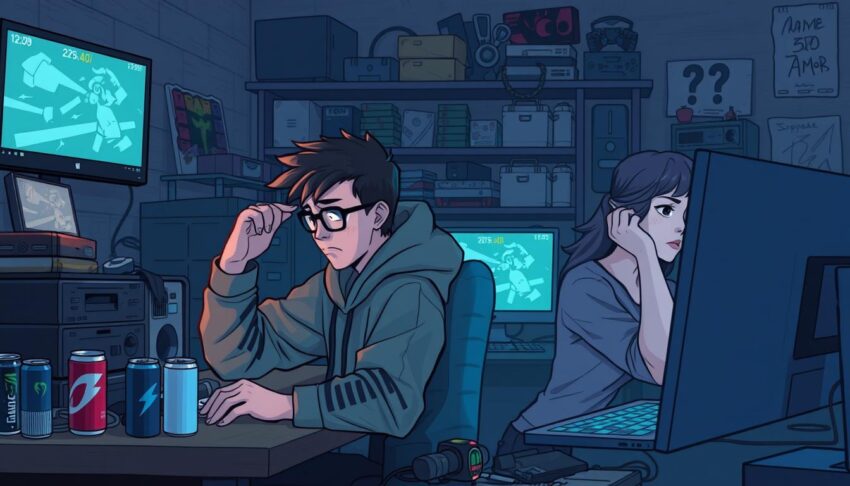
You left the cubicle for the webcam, swapping reports for raids. But, the irony is, the escape from the 9-to-5 often turns into a 24/7 grind.
Welcome to the digital gold rush. It’s a world where passion meets the harsh economics of attention.
Twitch has over 2 billion hours of watch time each month on 9 million channels. Yet, the top 1% of creators earn more than half of the nearly $900 million paid out. For others, the math is tough.
This isn’t just about long hours—it’s about an ultra-competitive profession that blurs all lines. Many creators work day jobs, nap, then stream all night. Where’s the off switch?
This section is a diagnostic. We’re examining the central paradox of modern content creation. How a platform for play became a factory floor for fatigue. Recognizing the pressure cooker is the first step to turning down the heat.
Recognizing Burnout Symptoms
Burnout doesn’t happen overnight. It’s a slow build-up of small sacrifices to the online world. Pokimane took a smart step by cutting back on long hours. This move helped her keep her mental health in check.
Cassie has seen young creators working non-stop, only to look tired and worn out. They seem to be running on empty. It’s not just about being tired; it’s about losing your creative spark.
Kruti Kanojia of Healthy Gamer points out that many streamers leave because of burnout and stress. When your online persona takes over, you lose yourself. You become a shadow of your content.
Burnout isn’t just feeling tired. It’s feeling cynical about your chat and dreading going live. It’s the quiet moments when you’re alone, unsure of who’s watching.
Imagine having a digital “thousand-yard stare.” Your body is there, but your creativity is gone. Are you always thinking about your next stream? Do you feel anxious, not excited, about it? That’s burnout.
The signs of burnout are many. Here are the main ones:
- Emotional Exhaustion: You’re drained before you even start. Talking to your audience feels like a chore, not a joy.
- Depersonalization & Cynicism: Your viewers become just “the chat.” You feel disconnected from them.
- Reduced Personal Accomplishment: No matter how many viewers you have, it feels empty. Your content seems dull to you.
- Identity Confusion: You struggle to keep your online and real-life selves separate. Who are you when you’re not streaming?
- Physical Manifestations: You sleep poorly and might get sick more often. Your body is tired of the mental strain.
Spotting these signs early can save you. It’s the difference between a needed break and a full-blown crisis. Knowing why streamers burn out helps you build a lasting career. It’s about keeping your passion alive, not just going through the motions.
Realistic Scheduling
Scheduling like a pro means treating your energy as a limited resource. The idea that success comes from endless work is a myth. It’s like trying to win chess by moving pieces fast without a plan.
BLU suggests setting small attainable goals. This isn’t about lowering your goals. It’s about growing in a sustainable way. Trying to stream for 40 hours a week from zero is a path to misery. A realistic schedule helps you win small victories.
You must decide your working hours. This is about managing your energy wisely. Are you more creative in the morning or at night? Stream when your audience is most active and when you’re at your best.
Here’s how to make a realistic schedule:
- Audit Your Energy: Track your focus and mood for a week. Schedule streams when you’re most energetic.
- Define Non-Negotiables: Set firm start and end times for your broadcasts. Treat them like professional appointments.
- Plan Your Streams In Advance: Use a weekly schedule or content calendar. This helps avoid last-minute stress and keeps your content organized.
This approach turns streaming into a well-managed operation. It’s not about being a digital martyr. It’s about building a long-term career. A realistic schedule helps make your passion profitable.
Setting Boundaries with Your Audience
Ninja lost 40,000 subscribers for just a two-day break. This shows how audience entitlement can harm a streamer’s mental health. It’s not just about the content; it’s about who owns the time.
Viewers felt they were owed Ninja’s time. This is the dark side of the parasocial relationship. It’s a one-sided bond that can be overwhelming.
Streamer BLU says, “Your stream is your HOME!” You wouldn’t let anyone insult your home. Feeling uncomfortable is a good reason to block or mute someone. It’s about keeping your space safe and respectful.
The Guardian article explains how fans can cross the line. They forget they’re just fans. This can lead to harassment and even real-life threats, like Ellohime faced.
Your openness is your brand. But without boundaries, you’re open to abuse. You need to protect yourself and your space.
So, what are these boundaries? They are your rules for how you interact with your audience.
- Define off-limits topics: Pick what you don’t want to talk about. Tell your audience and stick to it.
- Empower your mods: They help keep your community safe. Trust their judgment on who’s causing trouble.
- Stop apologizing for having a life: Letting people know you’re taking a break is okay. It’s not asking for permission.
Building these boundaries is key to mental health for streamers. It saves your energy and shapes your community’s culture. A good community respects these limits. A bad one will test them, and you must be ready to say no.
Setting boundaries shows your worth isn’t in being always available. It’s in the unique experience you share. Protect that space with all you have.
Planning Time Off
Let’s debunk a streaming industry myth: breaks are not signs of weakness but smart moves. In a world that values constant work, taking a day off seems wrong. But, planned downtime is your secret weapon for a long-lasting career.
Look at DanTDM’s journey. He worked non-stop early on, building his empire. Now, he works maybe three to four hours a day. His shift from endless work to a balanced schedule shows that sustainability is key.
Pokimane also shows the power of breaks. She “usually” takes one full day off each week. This isn’t laziness but a smart move to avoid burnout. It helps her remember who she is beyond her online persona.
Buffer time is another key strategy. It’s like shock absorbers for your schedule. It helps you handle unexpected events without derailing your plans. Think of it as miniature, daily versions of a proper break.
Planned breaks are not lost time but your Research & Development department. Innovation happens outside of streaming hours. Your brain needs downtime to make new connections.
Effective break planning sends important messages. It tells your audience you’re in it for the long run. It also tells your mind that your worth isn’t in constant work. A streamer with breaks is like a machine that gets regular check-ups.
So, how do you start? Begin small:
- Block one “untouchable” hour after each stream as decompression buffer
- Schedule one full day off weekly, and protect it like it’s a business meeting
- Plan a quarterly “content retreat”—a few days completely away to brainstorm
- Use vacation mode on your platforms unapologetically
The streaming world always pushes for more. But, the smart creator knows when to say “not today.” That’s not giving up. It’s building a career that lasts.
Mental Health Resources
The streaming world has created its own first aid. It goes beyond simple advice to tackle the mental challenges of making content online. Old advice doesn’t cut it when you’re dealing with live stats and changing algorithms.
Your mental health is key, not just an extra feature. It’s as important as updating your stream software.
Why do streamers need special help? They face unique stress from both being in the spotlight and working alone. They deal with feeling like an imposter and worry about their viewership numbers. This mix of pressures creates a special kind of anxiety.
Healthy Gamer offers coaching made for digital creators. It’s not just talk therapy. It’s about solving problems like feeling isolated, burned out, and struggling with being a “brand” and a person.
Pranayama is getting a modern twist. It’s not just old tech. It’s about using controlled breathing to calm your nervous system.
When you’re stressed live, saying “meditate later” won’t help. A quick breathing exercise can. Two techniques are very effective:
- Nadi Shodhana (Alternate Nostril Breathing): It balances your brain hemispheres. It’s like cleaning up your system from chat spam and stress.
- Bhramari (Bee Breath): The humming sound calms your vagus nerve. It relaxes you faster than any pep talk.
These aren’t just spiritual practices. They’re tools you can use right away.
The support landscape has changed. Old care models don’t work for digital creators. Now, there are targeted, immediate, and relevant resources.
| Resource Type | Generic Approach | Streamer-Specialized Approach | Best Use Case |
|---|---|---|---|
| Professional Support | Broad therapy for general anxiety/depression. | Coaching from orgs like Healthy Gamer that understand metrics, content cycles, and creator identity. | Long-term strategy, navigating career anxiety, and sustainable mindset building. |
| Immediate Coping Tools | “Take deep breaths” or “go for a walk.” | Structured practices like Pranayama (Nadi Shodhana, Bhramari) with direct neurological impact. | In-the-moment stress during a stream, pre-stream anxiety, or post-stream crash. |
| Community & Peer Support | General support groups. | Networks of fellow streamers who grasp the specific pressures of algorithms, platform changes, and audience dynamics. | Combating isolation, sharing practical tips, and normalizing the unique struggles of the job. |
| Educational Content | General mental wellness blogs and podcasts. | Content created by streamers and psychologists for streamers, discussing niche issues like donation guilt or hate raid recovery. | Proactive learning and building a resilient psychological framework for the career. |
The goal isn’t to never feel stressed. That’s not possible. The goal is to have the right tools for your mental health when you need them. Your content depends on it.
Investing in mental health resources shows strength, not weakness. It’s upgrading your most important tool: yourself.
Collaborating and Delegating
Collaboration in streaming is more than just getting more viewers. It’s about having a safety net to prevent burnout. The idea of a solo creator working alone is outdated. Healthy streaming habits rely on teamwork, not solo efforts.
Co-streaming splits the workload, making it less stressful. You share ideas and the screen with someone else. This turns your stream into a real conversation, not just a show.
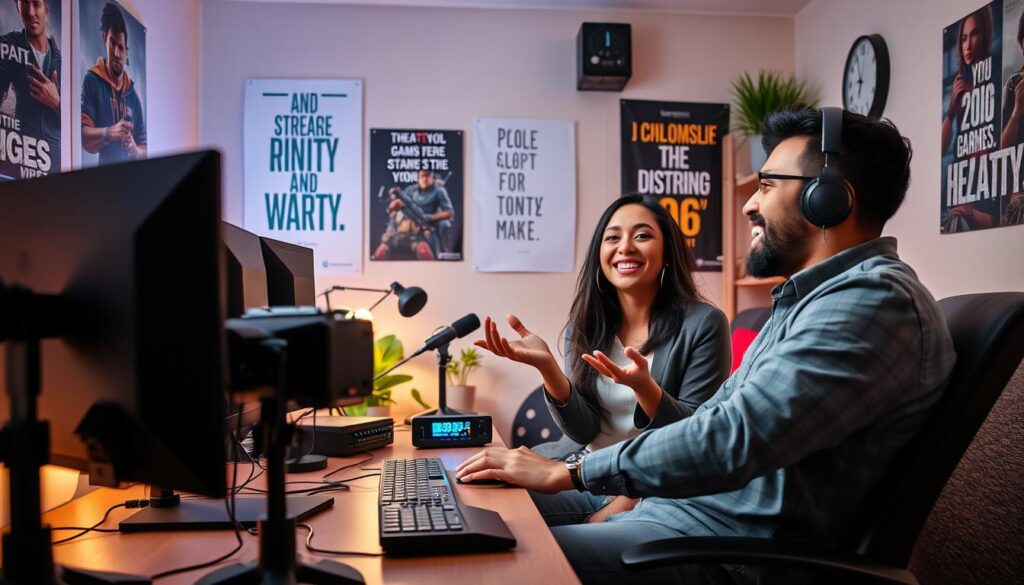
Delegation is key to success. You don’t need a huge team. Start with automation for tasks like handling commands or song requests. A good moderator keeps the chat clean. These are essential, not extras.
Using productivity tools is also important. Tools like Trello or Asana help plan your content. Toggl tracks your time, and Discord helps you work with other streamers. These tools save your energy for creativity.
Here’s how to grow from solo to team:
- Co-Streaming Partners: Find 2-3 streamers in similar niches. Plan regular collaborations. It cuts prep time and boosts audience interest.
- Tech Delegation: Automate repetitive tasks. Use bots for alerts and moderation. Cloud tools manage your assets.
- Human Support: Have one trusted mod and maybe a graphic designer friend. “Engage With Your Family And Friends” to build a real support network.
- Community as Crew: Involve your viewers in the show. Let them suggest topics and games. Make them part of the process.
Adding a small team changes everything. You’re no longer alone. You outsource tasks like scheduling and moderation. This lets you focus on what you do best: being yourself.
This shift is key to healthy streaming habits. It shows that sustainability needs systems, not just endurance. The solo act burns out faster and misses the point. The best streams come from teamwork, not solo efforts.
Your energy is limited. Collaboration and delegation are smart investments. They help you stay creative and engaged. Anything else is just busywork.
Listener/Viewer Feedback
If metrics were nutrition, most streamers would be surviving on a diet of pure sugar and caffeine. They get an immediate rush from a viewer count spike. But then, the algorithm shifts, and they crash.
The wise streamer knows there are two feedback systems. One builds muscle. The other just monitors your heart rate during a panic attack.
Let’s talk about the protein—the actual constructive feedback. BLU’s famous commandment to “WATCH BACK YOUR STREAMS” is key. It’s not about vanity. It’s about forensic analysis.
You’re not watching to admire your own jokes. You’re doing a cold, clinical VOD review. Is the audio crisp? Is your pacing engaging?
The question BLU poses is your editorial scalpel: “If I was a new viewer popping in for the first time, would I stick around and watch this content?” Answering this honestly gives you free, high-quality streamer analysis data.
Now, let’s look at the sugar—the live metrics. This is the other side of viewer feedback. It’s where careers can develop diabetes. We’re talking about the real-time viewer count and who’s chatting.
These numbers are seductive. They give the illusion of control and immediate audience engagement validation. But, as the source material notes, this obsession is a feedback loop from hell.
Here’s the critical differentiation you must master:
- Constructive Data: Your VOD review notes. A thoughtful comment in chat about audio levels. A pattern you notice where viewers engage most.
- Addictive Data: The minute-by-minute viewer count. Comparing your stats to another streamer’s in real-time. Refreshing your analytics dashboard hourly.
The first category offers insights you can use. Did the viewer feedback about your audio being low lead you to adjust your mixer? That’s progress. The second category only offers anxiety. Did your viewer count drop by three people because a big Fortnite event started? That’s noise.
Treat your VOD review sessions like a director’s commentary for your own work. Be ruthlessly analytical. Learn to glance at the live metrics like a pilot glances at instruments—for vital information, not for constant, nail-biting scrutiny.
The streamers who last are the ones who learn to separate the signal from the static. They harvest the useful constructive feedback while letting the addictive numbers scroll by. Your craft improves with the first. Only your blood pressure rises with the second.
Growing Slowly and Steadily
Forget what you’ve heard about ‘blowing up’—the real path is more like tending a garden. The industry loves viral hits and overnight stars. But the best advice is simple: aim for boring. BLU’s philosophy of setting small goals is a smart move against the content lottery.
Think of it like compound interest for making friends. Getting five real followers a week is more valuable than 500 random clicks. This builds community equity, a loyal group that grows with you.
DanTDM talks about his early days: “Growing is a huge grind… It’s relentless, non-stop.” The key is to focus on improvement, not just seeking validation. This makes the grind feel different, like building something, not begging for attention.
Growing slowly is smart for creators. It lets you make real changes and avoid the fame-obscurity cycle. You’re not just chasing views; you’re building a lasting community.
| Aspect | The Viral Chase | Steady Growth Strategy |
|---|---|---|
| Primary Goal | Maximum views immediately | Sustainable engagement over time |
| Community Building | Transactional relationships | Nurturing genuine connections |
| Pace & Expectations | Erratic, stress-inducing spikes | Measured, predictable progress |
| Burnout Risk | Extremely high (boom/bust cycle) | Managed through small wins |
| Long-Term Foundation | Fragile, dependent on trends | Resilient, built on consistency |
The table shows why the tortoise won. Steady growth avoids burnout. It makes you feel safe and lets you enjoy the journey.
This method needs patience, something our fast world lacks. But patience is worth it for your mental health and career. Your content becomes a marathon, not a sprint.
Success is redefined daily. Is there one new viewer today? Did you improve something? These small wins add up to something big. They build a strong foundation for when growth happens.
The streaming world is full of creators who flashed and faded. But sustainable growth is smart. It’s the key to a lasting career, not just a moment.
Success Stories
Forget what you think you know about being a streamer. The old idea of working 20 hours a day to partner status is outdated. Real success comes from healthy streaming habits that help creators last without burning out.
It’s time to debunk the myth. True success comes from creators who value their well-being. They focus on being human, not just trying to beat the algorithm.

- GeekyCassie (Cassie): As a Black woman in a male-dominated field, she worked hard. She defined success her way, focusing on impact and fair pay. Her message, “I am not gonna die on the internet for you!”, is about setting boundaries.
- DanTDM: Dan moved from intense YouTube fame to a balanced life. He shows a streaming career can have a second act, one that’s fulfilling offline.
- Pokimane: At the top as a female streamer, she chose to work less. She did this for her mental health and career longevity. It was a smart move for her well-being.
These aren’t tales of giving up. They’re about smart choices and growth. Cassie took control. DanTDM balanced his life. Pokimane chose to last longer.
The key isn’t a specific schedule or type of content. It’s valuing a long career over quick fame. They keep their passion alive by not letting work control them.
These stories teach us a valuable lesson. The healthiest habit is knowing when to stop and enjoy life. That’s what truly lasts.
Conclusion
Let’s face the final boss level. Handling streamer burnout isn’t about finding a secret cheat code. It’s about updating your whole system for your Twitch or YouTube career.
We’ve mixed community-first ideas with harsh industry warnings and balance strategies. The result is clear. Your passion and profits work together, not against each other.
The most powerful move? Seeing yourself as the main asset, not just fuel. Rekindling that spark means building a sustainable structure for streaming.
This is a marathon, not a sprint. The long-lasting streamers, like DrLupos and Pokimanes, aren’t just bright flames. They’re smart engineers who control their burn rate.
Your channel’s future depends on this change. Handling streamer burnout means choosing to last long in content creation. It’s how you win the long game.