

Let’s be honest. You’re not just playing games on camera. You’re creating a digital space where people come for more than just games. They come for you. That connection is your real value.
So, what happens when a viewer wants to show their loyalty? They want a physical piece of the community you’ve built. That’s where merchandise comes in. It’s a physical reminder of their fandom.
Think about it. Every hoodie in a coffee shop or sticker on a laptop is a small part of your brand. It’s not just about making money. It’s a natural step in building your community.
From a business point of view, it’s smart to diversify your income. Relying only on platform algorithms or sponsor deals is risky. A strong streamer merch operation brings in passive income that keeps earning even when you’re not working.
The best part? It’s easy, personal, and powerful for your brand. You can make and sell custom products in minutes. It’s a low-risk, high-reward opportunity. You’re not just selling t-shirts. You’re creating cultural value.
Types of Merch for Streamers (Physical & Digital)
Today’s streamers offer a wide range of products, both physical and digital. Your fans have different preferences. Some want to wear your merchandise, while others just want a digital version. It’s important to cater to both groups.
Physical merch is the classic choice. It’s the stuff you can hold and wear. It makes your brand a part of your viewers’ daily lives.
Apparel is a big hit. A good tee or hoodie is more than clothes; it shows who you are. But there’s more. Mugs, beanies, and hats are also popular.
For the dedicated fans, there’s special gear. Custom mousepads, controller skins, and desk mats make their space a shrine. These items keep your brand in sight every time they log on.
Digital products offer a different kind of value. They’re lightweight and easy to deliver. No inventory or shipping worries.
Digital art, wallpapers, and alert sounds are just the start. You can also sell subscriber badges and e-books. These items are quick to buy and use.
Selling digital products is easy. Fans can buy and use them instantly. It’s the perfect impulse buy for the digital age.
| Merch Type | Prime Examples | Strategic Value |
|---|---|---|
| Physical Apparel | Tees, Hoodies, Hats, Jackets | High perceived value, walking advertisement, deep fan commitment |
| Physical Accessories | Mugs, Mousepads, Stickers, Pins | Lower price point, frequent daily use, expands fan merchandise reach |
| Digital Art & Media | Wallpapers, Alert Sounds, Emotes | Instant delivery, 90%+ profit margin, feeds community culture |
| Digital Utilities | Printable Planners, E-books, Overlays | Practical value, positions you as an expert, recurring revenue |
So, which path is right? The answer is both. Physical items anchor your brand, while digital goods are easy to buy. They cater to different fans in different ways.
A balanced fan merchandise portfolio has something for everyone. Superfans get special items, while casual viewers buy digital goods. This approach builds a strong revenue base. Your digital products and physical items work together, monetizing every level of fan engagement.
Choosing a Print-On-Demand Service
Choosing a print-on-demand provider is a big step. It’s where your digital brand meets the physical world. You want this to be a strong connection, not weak. It’s not just picking a vendor. It’s building a supply chain that brings your brand to customers everywhere.
The print-on-demand model is a lifesaver for creators today. Zero inventory means zero waste—both financially and physically. Forget those garages full of unsold band tees from the ’90s. With POD, items are made only when sold. This keeps your money safe, not stuck in unsold merchandise.
But there’s more to it than just avoiding waste. Customization becomes effortless. Want to try a new design on a beanie before making more? Easy. Need to ship to EU fans without a Berlin warehouse? The global reach is built-in. This model saves you time, the most valuable resource.
So, who are the key players? In the POD world, Printful and Printify are the Coke and Pepsi—the big names. Printify offers 1,300+ products at low prices. Printful is known for quality and easy integration. Both work with your Shopify or Etsy store, acting as your silent factory.
Your job is to carefully compare them. This decision is more important than choosing a new gaming chair. Here’s what to check:
- Order Samples. Always. Would you buy a car without a test drive? Never trust marketing photos. Feel the fabric. Judge the print clarity. This is your brand’s touch.
- Understand Print Techniques. Know your DTG (Direct-to-Garment) from your sublimation. DTG is great for complex designs on cotton. Sublimation is best for all-over prints on polyester. The right technique is key for quality.
- Audit Fulfillment & Shipping Times. A “3-5 business day” production time plus shipping can turn into a 2-week wait for the customer. Map the real-world timeline from cart to doorstep.
- Decode the Global Cost Structure. That $29.99 hoodie might cost a fan in Australia $50+ with shipping. Understand how your partner’s global rates affect your audience’s willingness to pay.
Think of it this way: your print-on-demand partner handles the gritty backstage work—printing, packing, shipping, and basic customer service. You handle the creative direction and fan engagement. When this partnership works, it’s invisible. When it fails, it’s all your community sees: delayed orders, faded prints, and sizing nightmares.
The choice ultimately boils down to your brand’s priorities. Is rock-bottom pricing your main goal, or is premium quality non-negotiable? Do you need the widest product catalog, or the most reliable fulfillment to a specific region?
Selecting your POD service is the first tangible step to scaling your brand beyond pixels. Choose the infrastructure that makes your physical reality as compelling as your digital presence.
Setting Up Your Online Store
Just as you wouldn’t stream from a potato webcam, your merch store deserves better than a digital shed. This is where brand architecture begins. Your merch store setup is the first serious declaration that you’re building something beyond content. It’s the difference between a pop-up tent and a permanent embassy for your streaming nation.
You have options, each with its own political landscape. Think of it like choosing a capital city for your digital empire.

The Sovereign Nation: Your own website via Shopify, WooCommerce, or similar platforms. This is full autonomy. You control the laws, the taxes, and the flag flying over the building. The perceived value is higher—your community visits your territory directly. The catch? You’re responsible for every tourist. All traffic generation falls on your shoulders.
The Bustling Marketplace: Etsy, Amazon Merch, or Redbubble. You’re opening a boutique in a massive digital mall. Foot traffic comes built-in, but you’re one shop among thousands. Discoverability is both your advantage and your curse. You play by mall management’s rules, pay their rent (fees), and hope window-shoppers become buyers.
The New Frontier: TikTok Shop, or integrating a “Merch” panel directly into your Twitch or YouTube channel. This is guerilla retail. You’re selling where your audience already lives. The barrier between “watch” and “buy” dissolves. It’s immediate, native, and feels less like commerce and more like community participation.
Which territory should you claim? The answer lives in this comparison table:
| Platform Type | Primary Examples | Key Advantages | Notable Challenges | Ideal For Streamers Who… |
|---|---|---|---|---|
| Sovereign Nation | Shopify, WooCommerce, Squarespace | Full brand control, higher profit margins, direct customer data | Must drive all traffic, requires more technical setup | Have a strong, dedicated community and want a premium brand image |
| Bustling Marketplace | Etsy, Amazon Merch, Redbubble | Built-in audience, easier discovery, minimal setup hassle | High competition, platform fees, less brand distinction | Are starting out or want to test designs with minimal risk |
| New Frontier | TikTok Shop, Twitch Extensions, YouTube Shelf | Frictionless buying for viewers, native platform integration | Limited customization, tied to platform’s rules and longevity | Have highly engaged live audiences and want impulse-friendly sales |
Once you’ve chosen your digital soil, the next critical step is plumbing. Your store must connect seamlessly to your print-on-demand service. This integration should be invisible. When a fan clicks “buy,” the order should flow to Printful, Spring, or your chosen POD partner without you lifting a finger. Test this flow rigorously. A broken cart is a broken promise.
Now, pricing. This is where street vendor cunning meets Wall Street data. Your formula is simple, yet psychological: POD Cost + Platform Fees + Your Brand Value = Final Price.
Factor in the hard numbers first. What does the POD service charge per shirt? What percentage does Etsy or Shopify take? Then ask the subjective question: Is your logo worth a $5 premium? A $10 premium? Your community will vote with their wallets. Start conservative, then adjust based on demand. Remember, a sold-out item creates more buzz than a perpetually available one.
Your merch store setup is not a one-time task. It’s the foundation of your streaming economy. Choose your platform like a strategist, connect it like an engineer, and price like a psychologist. The storefront is built. Now open for business.
Design Tips for Maximum Appeal
Designing merch is like studying tribal cultures online. Your t-shirt is like a uniform. Your sticker is like a secret handshake. It’s about creating a visual culture, not just selling products.
Think of your best streamer merch as wearable memes. That inside joke from last week? It’s a badge of honor for those who were there. The minimalist logo you worked on? It’s a silent sign of community.
Good visual storytelling makes merch unforgettable. Your design should answer two questions: “Does this look cool?” and “Does this show I belong?” The first gets attention. The second builds loyalty.
The Toolbox: From DIY to Pro
You don’t need Photoshop skills to design merch. The modern streamer merch design world has tools for everyone:
- Canva & Adobe Express: These tools are great for beginners. Canva’s guide covers the basics, making designs look professional without needing to learn a lot.
- Hiring a Freelancer: If you’re not artistic, hire someone. You share your ideas; they handle the details. It’s like creative outsourcing.
Remember, keep your design simple, scalable, and clear. A design that looks good on your screen might not on fabric. Test it at thumbnail size to check if it’s readable and impactful.
Technical Nitty-Gritty That Matters
Consider the material when designing physical products. A detailed illustration might not work on a textured tee. For digital items, resolution is key. Use 300 DPI to avoid pixelated issues.
Your color scheme affects your brand’s feel. Does your channel feel like a neon cyberpunk scene or a cozy coffee shop? Your merch should match your brand’s vibe. Inconsistent colors can confuse your audience. Consistent colors strengthen your brand.
See your merch as a collection, not separate items. Does your t-shirt, hoodie, and sticker look like they belong together? This brand consistency turns casual buyers into collectors. It makes your store a destination, not just a shop.
Follow these design tips, and you’re not just a streamer with merch. You’re a curator of your community’s identity. Every sale is a welcome to your world.
Promoting Merch on Stream
Your stream isn’t like QVC. You need to promote fan merchandise subtly, like in a high-end TV show. Avoid the hard sell, as it can break the immersion. Instead, think of your merch as a supporting character in your story.
Effective promotion happens when you’re not directly pitching. Wear your own merch on stream. Use your custom items in your daily life. This shows the product in action, making it more relatable.
Then, there’s the art of celebrating sales. When someone buys something, make it a big deal. “Sarah just got the midnight hoodie! Legend!” This boosts the buyer’s status in your community and shows the value of the purchase.
Create content around your merchandise, not just about it. Here are some ideas:
- Mail Unboxing Segments: Spend five minutes showing off items you or fans have received. It proves the quality.
- Design Contests: Let your community vote on or submit ideas for new designs. This makes them feel invested.
- Merch Milestones: Tie new releases to channel achievements. “10K followers calls for a limited edition pin.”
Use your off-stream platforms to tease new designs. Share cryptic shots on Twitter. Use Instagram Stories for lifestyle shots. TikTok can build hype with design process videos. Always pin your store link at the top of your profiles.
This multi-platform approach is why many creators succeed when they make merch for Twitch through integrated storefronts. The link is always ready for when inspiration strikes.
Promoting your fan merchandise is about showing belonging. Each item is a badge of membership in your digital tribe. Framing it as a symbol of community makes promotion easy. You’re not just selling products; you’re giving people a sense of identity.
Managing Orders and Customer Service
Let’s burst the bubble: ‘passive income’ from merch isn’t as easy as it sounds. The POD service is like your orchestra’s strings, following the score. But you’re the conductor, leading the music and fixing problems when they happen.
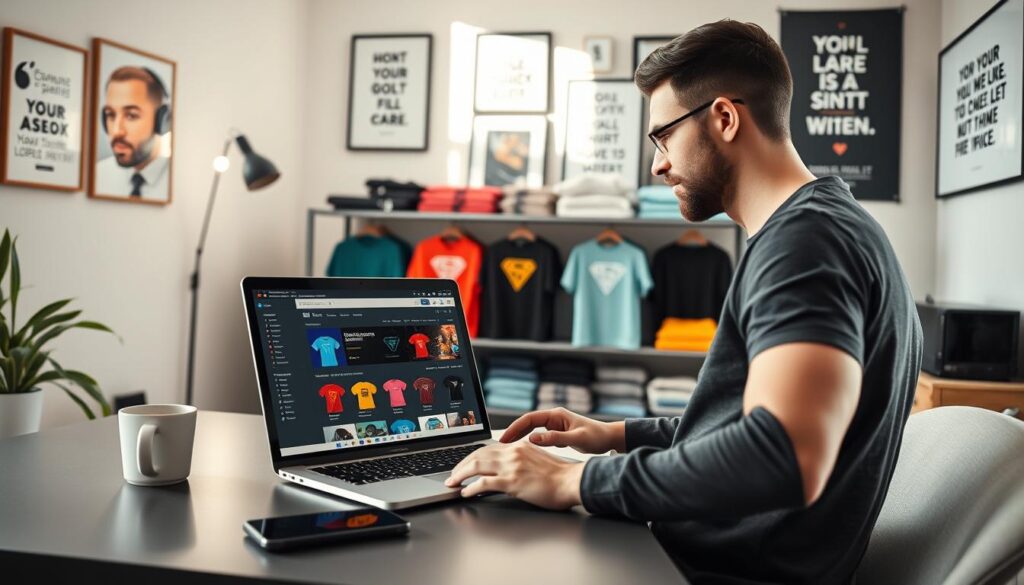
Services like Printful handle the hard stuff: printing, packing, and shipping worldwide. This is the heart of your operation. Your role changes to checking quality and solving problems. When a hoodie arrives wrong, the fan talks to you, their creator.
This is a test of your brand. Handle it poorly, and you lose trust. Handle it well, and you gain loyalty stronger than any video.
Here’s your guide for what’s supposedly ‘passive’:
- Be the Translator, Not the Technician: When problems come up, you’re the link between your fans and the POD service. Acknowledge the issue, promise to fix it, and then tell your provider. Keep your fans updated like you would your team in a game.
- Document Everything: Keep a simple log of common issues. Is there a size that runs small? Does shipping to one area always take longer? This info helps you improve your designs and set better expectations.
- Proactive Communication is King: If you know about production delays, share it with your fans. Say something like, “Demand was high, so your shirt is delayed. Here’s a 10% code for your patience.” This shows you’re honest and trustworthy.
The paradox is that this active management makes your income stream sustainable. A smooth backend means you’re not always fixing problems. It turns your fans into advocates, not critics. They’ll share their purchases, tag you, and help sell more while you’re busy or streaming.
Think of customer service as a way to show your brand’s values. It’s like live-action role-playing your brand’s reliability, care, and respect for your audience. Do it well, and your passive income becomes a reliable, automated source of funds. It pays for your next upgrade without you lifting a finger.
Case Studies: Successful Streamer Merch
Let’s look at some big wins. By studying three types of streamer merch, we learn what really sells. It’s not about copying. It’s about understanding the winning strategies.
Each type turns a key part of their channel into a product. This product becomes a symbol of belonging. It answers the question: “How do I show I’m part of this?”
The first type is the Iconography Master. Think of a top streamer with a simple, bold logo.
Their merch is a hit because the logo is the brand. Wearing it shows you’re part of something. It’s all about the visual identity.
This makes a hoodie or cap more than just clothes. It creates a sense of unity. Fans become walking ads, and the design is always clean.
Next, we have the Catchphrase King or Queen. This streamer uses the community’s own language.
A popular saying becomes a best-selling item. It’s like a secret handshake. It connects fans who spot each other.
The last type is the Lifestyle Curator. Their channel has a unique style.
Their merch store is like a boutique of that style. Think high-end hoodies, custom desk mats, or art prints.
This streamer merch is more than just branded. It’s curated. Fans buy a piece of the channel’s vibe. It’s about quality and style.
The key takeaway is clear. Good merch isn’t an afterthought. It reflects what makes a community special.
It goes beyond logos to tap into identity, language, or dreams. So, which type fits your channel?
| Archetype | Core Strength | Merch Examples | Why It Works | Community Message |
|---|---|---|---|---|
| Iconography Master | Strong, simple visual brand identity. | Logo tees, minimalist hoodies, emblem caps. | Creates instant recognition and unity; acts as a clean, wearable flag. | “I am part of this tribe.” |
| Catchphrase King/Queen | Organic, shared community language. | Catchphrase shirts, quote mugs, inside-joke pins. | Fosters insider bonding; transforms a verbal meme into a tangible token. | “We speak the same language.” |
| Lifestyle Curator | Cohesive channel aesthetic & vibe. | Premium apparel, curated accessories, art prints, desk mats. | Appeals to taste and aspiration; sells an experience and a quality standard. | “I share this aesthetic and value quality.” |
Your streamer merch plan starts with a simple question. What would your community proudly wear? Is it your symbol, saying, or style?
Find that answer, and you’ve found your archetype. The table is more than a comparison. It’s a tool to find your brand’s strength.
Tools and Resources
Think of your merch operation as a Swiss Army knife. You need the right tools for each job. Your merch store setup isn’t just about picking a platform. It’s about assembling a digital utility belt that turns creative ideas into sellable products. Forget duct tape and hope; we’re talking professional-grade software here.
Let’s start with design, the flashy exterior of your operation. For beginners, Canva Pro is your friendly neighborhood graphic designer—intuitive templates and commercial licensing included. When you’re ready to level up, Adobe Illustrator is the professional’s lightsaber. Or, outsource completely on Fiverr or Upwork and let someone else wield the creative tools.
Next, the manufacturing backbone: print-on-demand services. Printful and Printify are the industry’s twin engines. Choosing between them isn’t about good versus bad—it’s about which ecosystem fits your niche.
| Service | Best For | Key Advantage | Consideration |
|---|---|---|---|
| Printful | Premium quality & branding | White-label packaging | Higher base costs |
| Printify | Cost-conscious streamers | Vast supplier network | Variable quality control |
| Custom integrations | Tech-savvy creators | API flexibility | Steeper learning curve |
Your storefront is the public face of your empire. Shopify gives you sovereignty—your kingdom, your rules. Etsy offers built-in traffic, like setting up shop in a digital mall. Some streamers use both: Etsy for discovery, Shopify for the flagship experience. This hybrid approach forms the foundation of your merch store setup.
Marketing tools are your amplification system. Integrate StreamElements or Streamlabs for on-stream alerts that turn hype into sales. Schedule social media bursts with Buffer or Hootsuite. Even a dedicated Discord channel can serve as a simple CRM—track feedback, build community, and create repeat customers.
Analytics complete your merch store setup. Your store platform’s dashboard shows what’s selling. Google Analytics reveals who’s buying and from where. This data isn’t just numbers—it’s intelligence for your next product launch.
Here’s your quick-start checklist:
- Design: Canva Pro (start), Adobe Illustrator (scale), Fiverr (outsource)
- Production: Printful (premium), Printify (budget), compare catalogs
- Storefront: Shopify (control), Etsy (traffic), or both
- Marketing: Stream integration, social schedulers, community Discord
- Analytics: Platform dashboard + Google Analytics
The right toolkit doesn’t just make work easier—it makes your merch look like it came from a studio, not a basement. These tools polish your merch store setup from amateur hour to professional operation. Now, go build something worth selling.
Conclusion
Think of merch as your channel’s physical manifesto. It turns passive viewers into walking billboards for your digital campfire. We’ve explored everything from print-on-demand logistics to the psychology of great tee designs.
The data shows that streamer merch is a creative, profitable way to grow your brand. It’s how you build your community. That limited-edition hoodie isn’t just fabric. It’s a membership card.
This strategy also works well for digital products. Wallpaper packs, emotes, or custom alerts offer instant gratification. They turn support into identity without shipping delays. The revenue possibilities are strong when you focus on what your audience wants.
Your merch empire, whether physical or digital, needs effort and business smarts. The rewards go beyond just making money. They build a stronger, more visible, and connected channel. Now, design something your community would wear in the real world. That first sale isn’t just a transaction. It’s the moment your online persona sparks a tangible flame.