

Do you remember that season finale when your screen froze? It was the moment the killer was revealed. That wasn’t just bad TV karma. It was your bandwidth giving up.
In today’s world, almost 90% of American homes stream like it’s a utility. We’re not just watching TV anymore. We’re living through cultural moments, political views, and movies on our screens.
The difference between clear 4K and poor quality? It’s simple. More Mbps means less waiting and more fun. Your connection is more than a service. It’s the base of your digital life.
When this base shakes, everything on top wobbles. Your bandwidth decides if you enjoy great content or suffer from slow loading.
Download vs Upload
Ever tried talking where your voice sounds like a jumbled mess? That’s what many Americans face online. We’re great at listening but struggle to speak clearly when it comes to internet speeds.
Download speed is about data coming to your devices. It’s for your Netflix, Spotify, and news. Upload speed is about what you send out. It’s for your Zoom calls, live streams, and posts.
Most internet providers ignore upload speed. They know it’s there but don’t focus on it. Our internet plans offer fast downloads but slow uploads.
In today’s world, your upload speed could hold you back from going viral. Everyone wants to be seen online, but most ISPs are stuck in the past.
Fiber internet changes this. It offers equal speeds for uploading and downloading. It’s like having a real conversation online, not just listening.
Knowing the difference between download and upload speeds is key. It helps you share your ideas online, not just watch.
Your upload speed affects:
- How well your video calls work
- If your live streams buffer or play smoothly
- How fast you can send big files
- Your ability to work together in real-time
When looking for internet, ask about upload speeds. It could be the key to your online success.
Streaming Platform Requirements (Twitch, YouTube, Kick)
Streaming platforms are like political parties, each with its own rules and fans. Your internet speed shows if you’re a small campaign or a big event.
Twitch is the most demanding. You need 6-12 Mbps upload speed for live streams. Less speed makes your stream look like a small campaign.
YouTube is more balanced. It needs 5-10 Mbps for HD content. It’s a safe choice for creators.
Kick is the new challenger. It has similar bandwidth needs as the others.
FPS is key for a good stream. Higher FPS means smoother action. It’s the difference between a boring show and an exciting one.
| Platform | SD Quality | HD Quality | 4K Quality |
|---|---|---|---|
| Netflix | 3 Mbps | 5-10 Mbps | 25-50 Mbps |
| YouTube | 1-2 Mbps | 5-10 Mbps | 29+ Mbps |
| Twitch Streaming | – | 6-12 Mbps | – |
Your internet speed affects the stream quality. It’s like watching politics clearly or through a strobe light.
Remember, these are just the basics. For the best quality, aim higher, even during busy times. Your viewers will appreciate it.
Minimums for 720p, 1080p, 4K
Let’s talk about streaming quality. It’s not just about how many pixels you have. It’s about finding the right balance between bandwidth and ping. Think of it like a government needing both money and quick decisions.
720p streaming is like a small town’s basic service. It works with just 3 Mbps, handling simple tasks. But it’s not very impressive.
1080p is like a state government. You need 5-10 Mbps for good HD quality. It’s like a governor giving a clear speech, where you can see everything.

Then there’s 4K, the federal level. This is where every detail is clear. You need 25+ Mbps bandwidth and a low latency (under 40 ms ping).
High ping is like a slow government. Your data packets get stuck. Low ping means everything moves fast.
| Resolution | Minimum Speed | Ping Requirement | Real-World Equivalent |
|---|---|---|---|
| 720p (SD) | 3 Mbps | Local municipality service | |
| 1080p (HD) | 5-10 Mbps | State government clarity | |
| 4K/UHD | 25+ Mbps | Federal-level sharpness | |
| Multiple Streams | 100-500 Mbps | Whole government working |
Multiple streams mean everyone wants to watch something different. You need 100-500 Mbps and a ping under 30 ms. This prevents problems.
Remember, bandwidth is your budget, but ping is how fast things move. Even with lots of money, slow ping makes 4K streaming slow.
Testing Your Internet
Think your internet provider’s promises are as solid as a politician’s? It’s time to check those bandwidth claims with some digital sleuthing.
Online speed tests like TestMySpeed are your truth-tellers. They show you the real numbers behind the marketing hype. Try these tests at different times to see how your internet performs.
Test your internet on multiple devices at once. Your phone might get fast speeds, but your smart TV might be slow. The numbers show what you really get versus what you pay for.
Compare your test results to what your internet plan promises. If there’s a big difference, you’ve caught your provider in a bandwidth lie. Now, you have proof to ask for better service.
Dealing with ISP Bottleneck
Ever feel like your internet connection has its own version of partisan gridlock? Welcome to the ISP bottleneck – where your upload speed becomes the neglected infrastructure bill of your digital experience.
Most providers focus on download speeds to keep customers happy. Your upload speed? It’s like the congressional intern trying to pass a bill in a divided house.
Network congestion during peak hours (7-11 PM) makes your internet slow. It’s like a Friday night filibuster. Your ISP plays political games with bandwidth, slowing everything down.
The solution requires either revolution or relentless advocacy. Fiber internet offers symmetrical speeds, treating upload and download equally. It eliminates the bandwidth bias.
If fiber isn’t available in your area, become a persistent advocate. Document your speed tests and reference your contract. Demand infrastructure improvements like you’re lobbying for better public transit.
Your upload speed shouldn’t be the underfunded public program of your internet experience. With the right approach, you can break through the ISP bottleneck and achieve the digital democracy you deserve.
Quick Fixes
Before you go to war with your internet provider, try these simple fixes first. Think of them as political reforms for your network. They can make a big difference in your streaming stability right away.
A wired Ethernet connection is like a constitutional amendment for your internet. It brings order to the chaos caused by wireless signals. This change often leads to the most dramatic FPS improvement for streamers dealing with lag and dropped frames.
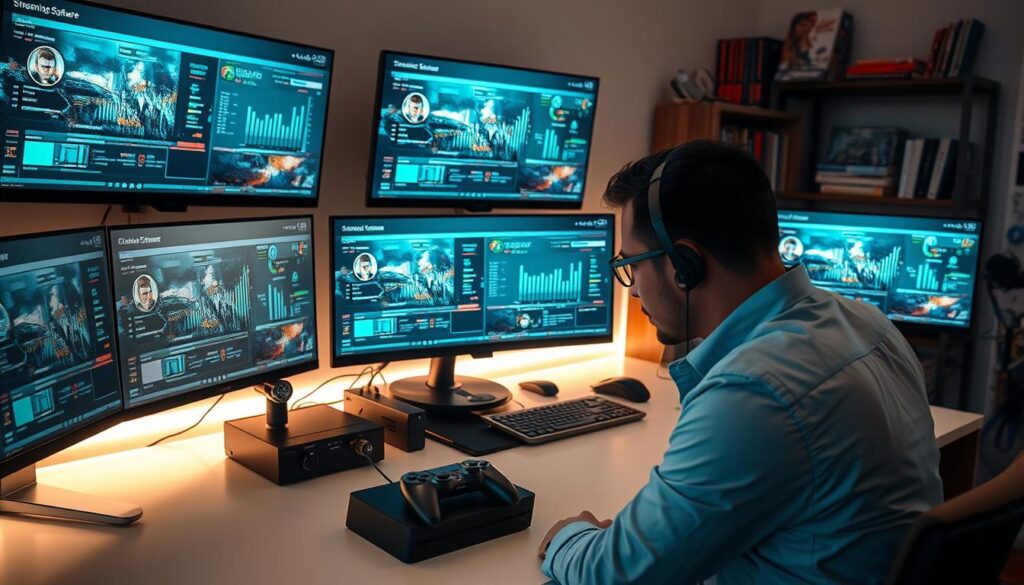
Where you place your router is very important. Put it in the center like a skilled moderator in a debate. This ensures all devices get equal attention. Avoid corners and cabinets that can block your signal.
Modern Wi-Fi 6 or mesh networks work like a well-organized campaign team. They spread out bandwidth evenly, so no single device uses too much. Your streaming FPS stability will improve a lot.
Background downloads are like lobbyists using up bandwidth. Pause them during important streams. That Windows update or cloud backup can wait until your broadcast is over.
Quality of Service (QoS) settings are like legislative priorities for your network. They tell your router which traffic to prioritize. Make your streaming app a priority and see your FPS consistency improve right away.
These quick changes can turn choppy streams into smooth presentations. For more detailed solutions, check out our guide on improving your streaming experience with more technical tweaks.
hardware,
Let’s talk about the political machinery of your digital life. Your router isn’t just some box blinking in the corner. It’s your campaign headquarters for everything online.
Using an older router is like trying to win an election with telegraph operators. It technically works, but you’re not getting any votes for performance excellence. The delays add up, and your ping starts looking like a congressional filibuster.
Modern Wi-Fi 6E and Wi-Fi 7 routers are the super PACs of connectivity. They bring serious bandwidth and organization to your digital campaign. Suddenly, responses become instantaneous, not bureaucratic.
Keep your firmware updated too. It’s like having a well-trained staff that actually follows through on promises. Your hardware should work for you, not against you.
Upgrade your router and watch everything transform. Your digital presence becomes formidable, not frustrating. That’s how you win elections in the modern age.
plan upgrades,
Do you remember that 25 Mbps plan from when you lived alone? It’s like trying to run a big campaign with a small budget.
Today, homes need a lot more bandwidth. Families usually need 100-500 Mbps. It’s like having a big budget for your digital needs.
For those who use a lot of data, gigabit fiber is the best. Xfinity has plans from 300 Mbps to 2000 Mbps. Fiber gives you the same speed in both directions for the best performance.
More devices and higher quality videos mean you need more bandwidth. It’s not just about being connected. It’s about having the digital setup your home needs.
network tweaks)
Ever feel like your digital voice gets lost in the political noise? Like your content uploads move at congressional hearing speed? Let’s talk about optimizing your connection’s infrastructure.
Think of QoS settings as your digital campaign manager. They prioritize streaming traffic like a savvy politician courts key demographics. Your important data gets the VIP treatment it deserves.
Ethernet cables provide the reliable ground game versus Wi-Fi’s aerial campaign. They deliver stability where wireless signals falter. It’s the difference between a firm handshake and a dropped call.
Router placement matters too. Keep it away from interference – the digital equivalent of avoiding bad polling locations. These tweaks boost your upload speed, ensuring your message cuts through the static.
FAQs
Is 25 Mbps enough for 4K streaming? Technically, yes. But for smooth streaming, you should aim for 40-50 Mbps. This ensures your Netflix streams without any awkward pauses.
For live streaming on Twitch or YouTube, upload speed is key. You need at least 6 Mbps for 1080p and 10-15 Mbps for 4K. Think of it as your campaign manager: without enough bandwidth, your message gets lost in translation.
How do FPS and ping relate? FPS is your frame rate—how smooth your video looks. Ping is your latency—how fast data travels. High ping means lag, like polling numbers that don’t match election results. Keep both low for a seamless experience.
Why is fiber ideal? Fiber offers symmetrical speeds, meaning your upload matches your download. It’s the well-funded incumbent with flawless infrastructure—no buffering, no dropouts, just pure streaming victory.