

Loot box legislation has moved from a niche policy argument into a practical production risk for game studios. The pressure is not only about whether a random reward is entertaining. Regulators, researchers, parents, and players are asking whether paid chance-based systems resemble gambling, whether minors are adequately protected, and whether rare digital items can carry real economic value outside the game client.
That shift matters because monetization is usually designed early, not bolted on after art, progression, matchmaking, and storefront systems are complete. If a studio builds a game around paid random rewards, later legal restrictions can affect age ratings, regional availability, payment flows, economy design, and live-service revenue forecasts. For players, the same pressure can mean clearer disclosures, fewer high-friction spending loops, or different reward structures.
Why Loot Box Legislation Is Tightening Around Value
The current regulatory concern is strongest where paid random rewards connect to items that can be sold, traded, or otherwise converted into money. A purely cosmetic prize can still matter if it has a market price. That is why the debate often focuses less on whether an item changes gameplay and more on whether money enters the system before a random outcome and whether the result has exchange value afterward.
Loot Box Legislation And The Valve Allegations
On February 25, 2026, New York Attorney General Letitia James sued Valve Corporation, the company behind Counter-Strike 2, Team Fortress 2, and Dota 2, alleging that paid loot boxes violated New York gambling laws by letting players win rare virtual items that could be converted into real money. The Attorney General’s release also said one item was reportedly sold for more than US$1 million, a figure that helps explain why regulators are focusing on market value rather than just in-game presentation New York Attorney General filing.
The case should be read cautiously. A lawsuit is an allegation, not a final ruling, and the provided research does not establish a judgment as of October 10, 2026. Still, the filing showed how legal scrutiny can attach to a platform-level item economy, not only to a single purchase screen. That distinction is important for developers that allow trading, marketplace listings, or third-party value signals around cosmetic items.
Why Cash-Out Value Changes Risk
From a design standpoint, the risky zone is the combination of payment, chance, scarcity, and convertibility. A studio may describe a reward as cosmetic, but if the item can be sold or treated as valuable by players, regulators may ask whether the system functions like gambling. That question becomes sharper when younger players can access the system or when a game’s community normalizes repeated opening of paid random containers.
For teams planning new live-service titles, loot box legislation encourages a more conservative review of item economies. Legal, product, economy design, and community teams need to understand whether an item can be traded, whether the reward odds are disclosed, whether spending limits exist, and whether the game gives minors enough protection. Those are production questions, not just policy questions.
How Loot Box Legislation Changes Development Choices
Studios do not need a final court decision in every market before they feel pressure. A credible enforcement action can be enough to change investor questions, platform review discussions, and internal greenlight meetings. A monetization feature that once looked attractive because it drove repeat purchases may now look fragile if it depends on mechanics that regulators are actively testing.
Monetization Design Moves Earlier In Production
One practical effect is that monetization design has to move closer to the start of development. If paid random rewards are central to progression, cosmetics, or seasonal events, removing them late can disrupt balance and player incentives. A more cautious studio may choose direct-purchase cosmetics, battle passes with visible rewards, earnable currencies, or non-random bundles instead. Those models can still be aggressive if prices are opaque or pressure tactics are used, but they generally reduce the legal concern created by chance-based paid outcomes.
The research base also gives regulators more than a theoretical concern. A 2026 study of 3,709 adult regular gamblers who play video games found that loot-box purchasers were significantly more likely to show problem gambling behavior and related harms, even after controlling for other gambling activity; frequency of purchase and money spent were both associated with higher severity Addictive Behaviors study. That does not prove every player is harmed by every random reward. It does support caution around designs that encourage repeated spending without clear limits.
Ratings, Regional Builds, And Store Review
Another development impact is operational. If a game needs different monetization rules by country, the studio may have to maintain regional builds, change payment options, disable certain features, or adjust store descriptions. That can add QA work and increase the chance of inconsistent player experiences across markets. For small studios, the compliance cost alone may push them away from paid random rewards.
Large publishers have more infrastructure, but they also have more exposure. A major live-service economy can involve millions of transactions, years of seasonal content, and player inventories that retain perceived value. If the model becomes legally risky, the studio cannot simply remove it without upsetting players who already spent money. This is one reason many developers see loot box laws as a critical consideration, which is also discussed on player-focused platforms like MostPlays.
Consumer Awareness For Players And Parents
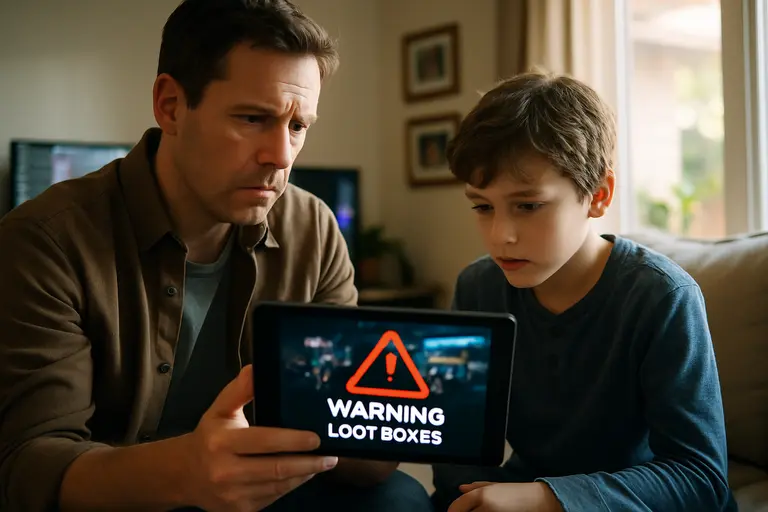
Players should treat paid random rewards differently from ordinary downloadable content. A fixed expansion or character pack tells the buyer what is being purchased. A loot box sells a chance at an outcome, which makes spending harder to evaluate. That difference is especially relevant for parents managing child accounts because small repeated purchases can be harder to notice than a single premium game purchase.
Spending Signals Worth Checking
Consumer awareness does not require panic. It requires clear questions before money is spent. The most useful checks are practical and repeatable:
- Does the game disclose the odds of each reward tier before purchase?
- Can rewards be traded, sold, or valued outside the game?
- Are spending limits, parental controls, and purchase notifications enabled?
- Does the game use limited-time pressure around random rewards?
- Can the desired item be bought directly instead of through chance?
Community coverage also matters because players often notice spending pressure before policymakers do. Sites focused on player experiences, such as MostPlays, can be invaluable for staying informed. Still, individual players should rely on platform-level purchase histories and parental control tools rather than assuming a game’s presentation makes spending harmless.
The strongest consumer position is simple: if a player would not be comfortable receiving the least valuable possible reward, the purchase may not be worth making. That standard is stricter than many storefront prompts, but it better reflects the uncertainty built into random rewards.
Loot Box Legislation And Player Trust
Loot box legislation is likely to keep influencing how studios design economies, even where rules remain unsettled. The direction of pressure is clear: disclose more, protect minors more carefully, reduce cash-out concerns, and avoid reward systems that depend on repeated paid chance events. Developers that ignore those signals may face legal risk, community distrust, or costly redesigns after launch.
What Studios Can Still Do Responsibly
There is room for monetization that funds ongoing development without pushing players toward opaque spending. Clear prices, visible rewards, account-level limits, meaningful parental controls, and non-random alternatives are all compatible with live-service design. Studios can also separate cosmetic collecting from tradable markets, which may reduce the argument that a random reward has real-world financial value.
The careful reading for players and developers is not that every randomized reward is automatically illegal or harmful. The better reading is that paid randomness now carries a higher burden of proof. If a studio wants to use it, it needs to explain the odds, control access, monitor spending risk, and prepare for regulators to examine how the item economy works in practice. That is where loot box legislation is already changing game development: it turns monetization from a revenue feature into a consumer-protection test.