
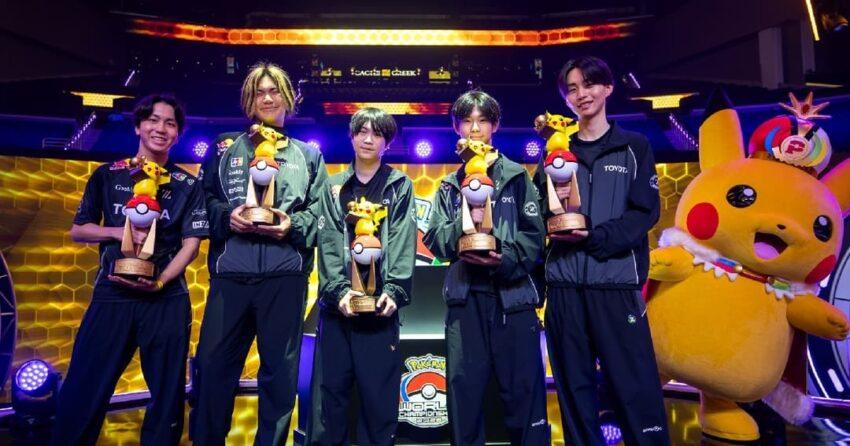
The ZETA DIVISION Pokémon UNITE win in San Francisco delivered the ending competitive UNITE could hardly have scripted better. After finishing fifth at Worlds in 2024 and runner-up in 2025, the Japanese organization defeated Europe’s KOMAÏ 3-1 on August 30 to become the last UNITE champion crowned inside the Pokémon World Championships.
The trophy closes one chapter, but it also creates a benchmark for the next one. Pokémon UNITE is leaving Worlds and moving toward the standalone Aeos Crown 2027 Tokyo, a transition examined in our earlier look at UNITE’s standalone esports shift. ZETA’s victory means that new circuit does not begin with a blank competitive history. It inherits a defending world champion, an international rivalry and expectations established on Pokémon’s biggest shared stage.
That makes the result more consequential than a normal season finale.
The ZETA DIVISION Pokémon UNITE Win Completed a Three-Year Climb
ZETA did not arrive in San Francisco as an organization waiting for its first serious international opportunity.
The team had already finished fifth at the 2024 World Championship before reaching the 2025 Grand Final and losing to PERÚ UNITE. Its competitive team record shows how consistently close the organization had come without securing the biggest trophy.
The 2026 season made the eventual championship less predictable. ZETA finished ninth in the Pokémon UNITE Asia Champions League Japan League and fifth at the Pokémon Japan Championships before reaching Worlds.
That context matters because the title was not the inevitable conclusion of regional dominance. ZETA reached San Francisco as a team that had already demonstrated world-class potential but still needed to rediscover its best form at exactly the right tournament.
Timing became its advantage.
Surviving IGZIST May Have Been the Real Championship Test
The Grand Final ended 3-1, but ZETA’s most precarious moment arrived one round earlier.
Its semifinal against fellow Japanese team IGZIST stretched to all five games. ZETA eventually escaped with a 3-2 victory after surviving a situation in which elimination was close enough that the official UNITE broadcast highlighted a dramatic late turnaround.
That kind of match changes the meaning of the final result.
A dominant tournament run can suggest that one team entered substantially stronger than everyone else. ZETA’s path instead demonstrated resilience under knockout pressure. The team had to survive instability before it could control Championship Sunday.
KOMAÏ presented a different challenge. The European Regional League champion reached the final carrying Europe’s last chance at the trophy and managed to take Game 3 after ZETA opened a 2-0 series lead.
ZETA answered in Game 4, secured the decisive objective fight and closed the series.
The title had to be earned twice: first by surviving the semifinal, then by stopping KOMAÏ’s comeback.
KOMAÏ Made the Final Feel International Again
Europe finishing second is more than a footnote to a Japanese championship.
The official final standings placed ZETA first, KOMAÏ second and IGZIST third, meaning two Japanese teams reached the podium while a European roster separated them.
That is useful for the competitive health of the game.
A global esport becomes less compelling when its World Championship simply reproduces one regional league’s hierarchy. KOMAÏ reaching Championship Sunday gave Aeos Crown something valuable to inherit: evidence that serious challengers can emerge from multiple regions.
The new circuit will need much more of that.
| Signal | What Worlds 2026 Delivered | Why It Matters for Aeos Crown |
|---|---|---|
| Defending champion | ZETA DIVISION | Gives the new circuit a clear team to chase |
| European contender | KOMAÏ finished second | Supports cross-regional competition |
| Japanese depth | ZETA and IGZIST reached top three | Establishes Japan as an early benchmark |
| Close elimination games | ZETA survived a 3-2 semifinal | Shows meaningful competitive depth |
| Returning storylines | ZETA improved from 2025 runner-up | Gives future events continuity |
| Global qualification | Teams arrived from multiple regions | Creates a foundation for standalone play |
The important signal is continuity. Aeos Crown becomes easier to market if fans already understand who is defending something and who wants revenge.
ZETA Now Becomes the Team Aeos Crown Has to Chase
The planned replacement for UNITE’s Worlds presence is not a reduced exhibition.
The Aeos Crown 2027 plan calls for online regional qualifiers beginning tentatively in November 2026, followed by an offline final in Tokyo in late March 2027. Up to 32 qualified teams are expected to receive travel awards to attend.
ZETA therefore enters the transition with an unusual status.
It is the final world champion of the old structure but not automatically the champion of the new one. Once regional qualification begins, the organization must prove itself again under a competition built entirely around Pokémon UNITE.
That distinction should help rather than hurt the scene.
A champion gives the circuit gravity. Every regional winner reaching Tokyo will know the standard established in San Francisco, whether ZETA itself qualifies or not.
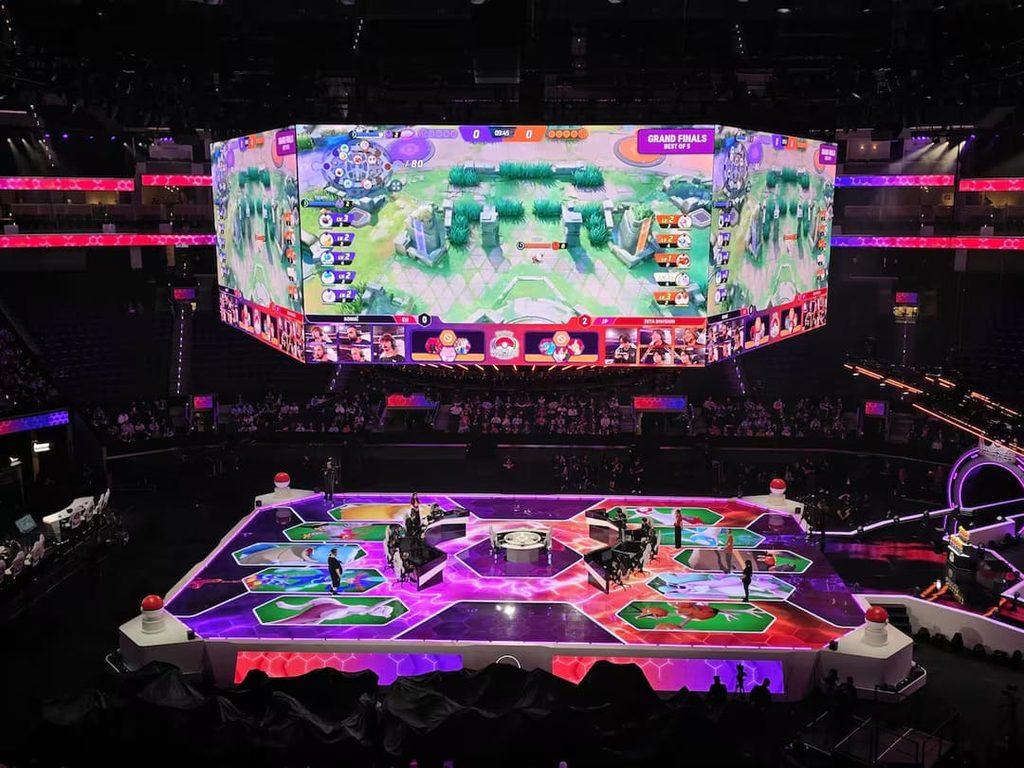
New Pokémon Show the Competitive Game Is Still Moving
The championship weekend also made clear that leaving Worlds is not the same as freezing development.
After ZETA’s victory, four additions were announced for Pokémon UNITE: Morpeko, Toxtricity, Jolteon and Flareon. Morpeko and Toxtricity are scheduled for September, with Jolteon and Flareon following in October.
Those additions arrive before the tentative November start of Aeos Crown regional qualifying.
For professional teams, that means the competitive environment could change quickly between Worlds and the first stage of the new circuit. New characters can alter drafts, compositions and matchups, while balance changes can weaken strategies that worked in San Francisco.
The defending champion’s strongest enemy may therefore be a moving competitive meta rather than one specific rival.
Tokyo Will Reveal Whether Worlds Created Lasting Momentum
The signals over the next several months will be clearer than they were before San Francisco.
ZETA’s roster decisions matter. KOMAÏ’s ability to sustain its European momentum matters. So does whether organizations from North America, Latin America, India, Korea, China and the wider Asia-Pacific field commit seriously to the qualification path.
Audience behavior may be even more revealing.
Pokémon Worlds provided UNITE with enormous surrounding visibility. Aeos Crown will have to generate attention using its own championship race, players and regional rivalries. ZETA versus KOMAÏ can become part of that story only if the ecosystem gives those teams repeated opportunities to meet again.
The ZETA DIVISION Pokémon UNITE win therefore feels less like an ending than a handoff. San Francisco finally gave ZETA the world title it had been chasing, but it also gave the standalone era something it badly needed before its first qualifier begins: a recognizable champion worth hunting.
Aeos Crown now has to prove that the stories created at Worlds can survive without Worlds around them. If ZETA, KOMAÏ and the rest of the international field carry their rivalries into Tokyo, Pokémon UNITE will not simply have replaced its old championship. It may have built a stronger competitive identity around the game itself.