
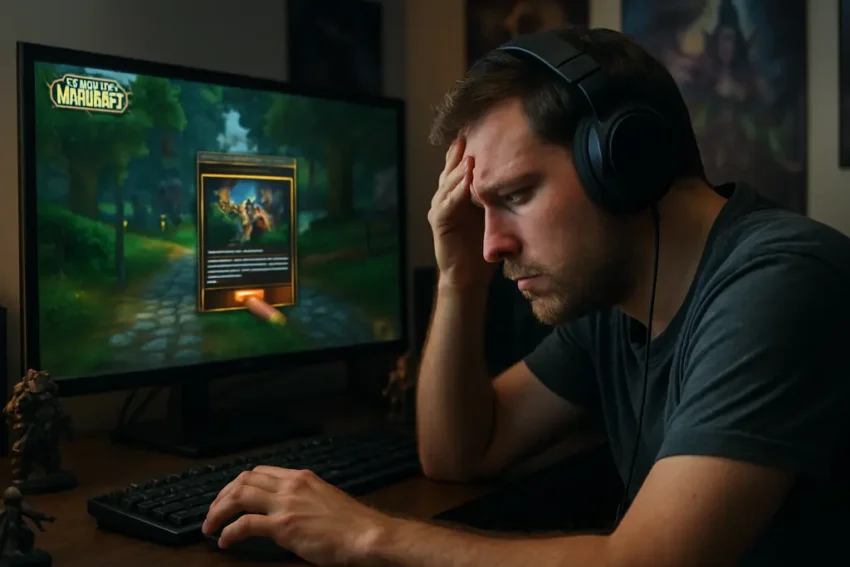
WoW microtransactions became a sharper community concern in 2026 after Blizzard released a $75 housing bundle in the World of Warcraft shop. The reaction was not simply about one expensive cosmetic package. It reflected a longer-running question for subscribers: how far can a monthly-fee MMO expand paid cosmetics, premium currency, and shop-only presentation before players start to feel the game’s reward structure is being weakened?
The evidence available is strongest around two flashpoints. The first was the May 2026 housing bundle, which Windows Central reported cost $75, or 7,500 Hearthsteel, and included two housing exteriors with interior decor items; the article noted that players compared the price with the cost of a full expansion Windows Central reported. The second was Hearthsteel itself, a premium currency discussed heavily after it was datamined in November 2025. A major official forum thread on November 6, 2025, titled “Scrap the Premium Currency NOW!” captured player objections that such a currency could obscure real-money prices and push higher spending official WoW forum thread.
Why WoW microtransactions Became A Trust Issue
The $75 Housing Bundle Set The Tone
A $75 cosmetic housing bundle is the kind of price point that changes the conversation from optional extras to perceived priorities. Housing is especially sensitive because it is tied to player identity, collection habits, and the social presentation of a character or account. When high-visibility decor and exteriors appear in the shop at a premium price, some players read that as a signal that the most desirable personal-expression items may increasingly sit outside ordinary play.
That does not prove that in-game rewards are being reduced, and the available reporting does not quantify how many players supported or opposed the bundle. Still, the reaction matters because World of Warcraft is not a free-to-play title. Its long-standing subscription model changes expectations. Many subscribers accept paid expansions and monthly access fees as part of the deal. A growing shop layered on top of that model faces a different standard than cosmetic sales in games that charge nothing upfront.
For consumer awareness, the key point is not whether a housing exterior affects raid performance or dungeon balance. It is whether the store changes how players perceive effort, status, and completion. In a game built around collecting mounts, appearances, pets, achievements, and rare drops, cosmetic rewards are not peripheral to everyone. For some players, they are the core loop.
What WoW microtransactions Signal To Players
WoW microtransactions now sit in a more contested space because the shop is attached to a game with decades of accumulated player habits. When long-time players see polished cosmetics sold separately, they may question whether similar effort could have gone into earnable rewards, bug fixes, class tuning, or patch content. The research notes include social-media complaints along those lines, but those posts should be treated as anecdotal sentiment rather than a measured survey of the full player base.
The more reliable conclusion is narrower: visible community pushback exists, and it intensified around high prices and premium currency. That is enough to make the shop a reputation risk even if individual purchases remain optional. Optional does not always mean unimportant in a game where identity, prestige, and collection are part of the entertainment value.
Hearthsteel Changes The Price Conversation
Premium Currency Can Blur The Real Cost
Hearthsteel is central to the current dispute because premium currencies alter how players encounter prices. A direct $75 tag is easy to compare with a subscription month, an expansion, or another full game. A 7,500-unit currency price can create one extra step between the player and the real cost, especially if currency is sold in bundles that do not match item prices exactly.
The official forum reaction in November 2025 shows that at least some players understood this immediately. Their complaints focused less on a single cosmetic and more on the system around it: whether currency packs could encourage overspending, whether leftover balances could make future purchases feel easier, and whether the store would become harder to judge at a glance.
This is where caution is needed. The research notes say Hearthsteel was datamined in November 2025 and discussed heavily before its use became a broader issue in 2026. Datamining can reveal planned or test content, but it does not always reflect final implementation. By May 2026, however, the Windows Central report tied Hearthsteel directly to the $75 housing bundle’s listed price, making the currency part of the public consumer conversation rather than only a speculative concern.
The Subscription Argument Remains Divided
Some players defend microtransactions by arguing that shop revenue may help keep the base subscription from rising. The research notes identify that argument in a November 6, 2025 forum debate. That claim is difficult to evaluate without official financial allocation details. A stable monthly fee does not prove the shop is the reason, just as shop growth does not prove subscription value has declined.
For players, the practical question is more direct: what is the total annual cost of participating in the parts of World of Warcraft they care about? A subscriber who ignores cosmetics may see little change. A housing-focused collector may face a different experience if highly desirable decor is repeatedly sold through premium bundles. Both experiences can be true at once.
Community Reaction Is About Game Integrity
Cosmetics Still Affect MMO Culture
The phrase “game integrity” is often used for competitive fairness, but in an MMO it also applies to social meaning. If a rare mount is earned through a difficult activity, it communicates one kind of achievement. If a visually similar or more elaborate item is purchased, it communicates another. Neither is automatically wrong, but the balance between earned and paid rewards shapes how players interpret the world.
That is why WoW microtransactions create a stronger reaction than ordinary store add-ons in many single-player games. World of Warcraft is a shared environment. Player housing, mounts, transmogs, and decor are not just private inventory items; they are shown to other players and folded into the community’s sense of status and taste.
The concern is not unique to Blizzard. Similar debates are appearing around other online RPGs, including questions raised in our coverage of Aion 2 monetization. Across these games, the same pattern repeats: players may accept cosmetic sales in principle, then object when prices, currency design, or shop frequency appear to push beyond what they consider fair.
Evidence Shows Concern, Not A Full Player Census
The available evidence supports a careful reading. There was documented criticism of the $75 housing bundle in May 2026. There was documented pushback on the official forums against Hearthsteel in November 2025. There were broader social complaints about monetization, shop frequency, and perceived priorities. What the research does not provide is a statistically representative survey of the entire subscriber base, sales data for the bundle, or an official Blizzard statement explaining how shop revenue relates to development resources.
That distinction matters. Online reaction can be intense without being universal. It can also identify real pressure points before companies acknowledge them. For a consumer-aware reading, the safest conclusion is that Blizzard’s shop strategy has become a recurring trust issue among a visible portion of the community, especially where prices approach expansion-level spending and premium currency reduces price clarity.
What Players Can Evaluate Before Spending

Questions For Buyers And Parents
Players do not need to treat every store item as harmful to assess it critically. They can separate the appeal of an item from the structure used to sell it. That is especially useful for younger players, households sharing payment methods, or collectors who feel pressure to keep up with limited-time offerings or premium bundles.
- Convert Hearthsteel prices into local currency before purchase.
- Check whether currency bundles leave an unused balance.
- Compare the item price with a subscription month or expansion price.
- Decide whether the item replaces a goal that would normally be earned through play.
- Use platform and account spending controls where appropriate.
These steps do not answer the design question for Blizzard, but they make the individual purchase clearer. The strongest consumer protection starts with seeing the real price before the emotional pull of a cosmetic item takes over.
Why Coverage Should Stay Precise
Monetization debates can become exaggerated quickly, especially around a franchise as large as World of Warcraft. The cautious view is that the shop has not been shown here to change combat power or competitive outcomes. The better-supported concern is about price transparency, player trust, and the cultural value of cosmetic rewards in a subscription MMO.
Readers following the wider business of game communities can also compare coverage across related reporting hubs. For instance, GameCloud Network offers insights into how monetization trends and game-market dynamics interrelate. The shared theme is that community response is now part of the product story, not a side note.
WoW microtransactions And Game Integrity
WoW microtransactions are not controversial only because they cost money. They are controversial because World of Warcraft already asks for long-term commitment through subscriptions, expansions, and time investment. In that setting, a $75 housing bundle and a premium currency such as Hearthsteel raise fair questions about how clearly prices are presented and where the most appealing cosmetic rewards should live.
The available record does not prove that Blizzard has crossed a single objective line shared by all players. It does show that a visible section of the community sees the shop as moving closer to the center of the game experience. For Blizzard, the risk is not just backlash to one bundle. It is the slower erosion of confidence that the world’s best-looking rewards, social expression tools, and housing items will remain meaningfully connected to play rather than payment.