
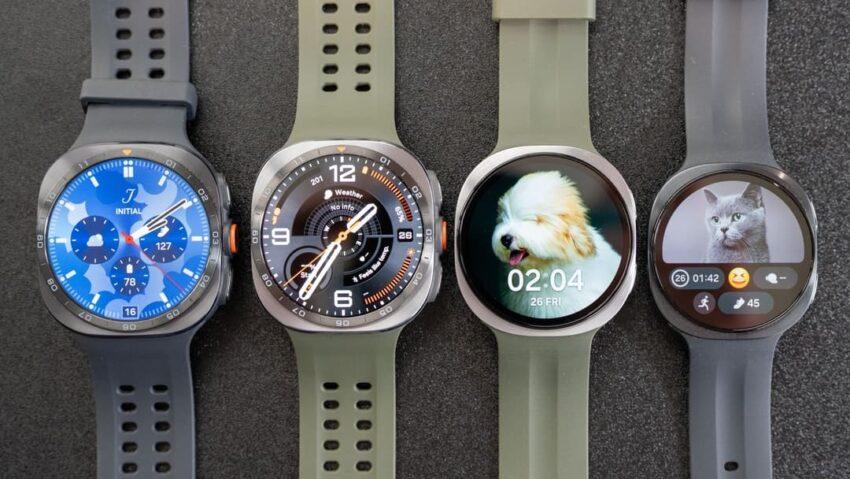
Galaxy Watch Ultra2 vs Watch9 is the Samsung wearable choice that looks like a simple premium-versus-standard comparison until health tracking, battery life, durability, and daily comfort enter the picture. The Ultra model is built for harder use, but the regular Watch9 may be the smarter choice for people who want health insights without wearing a larger adventure watch every day.
Samsung announced the Galaxy Watch Ultra2 and Watch9 on July 22, 2026, alongside its wider Galaxy AI push. That makes the comparison timely for buyers already thinking about AI wearable upgrades and whether health features are becoming more useful than basic notifications.
Galaxy Watch Ultra2 vs Watch9 Starts With Lifestyle
The Galaxy Watch Ultra2 is the more extreme device. Samsung describes it as a 47 mm watch built for outdoor adventure, high-performance tracking, durability, and continuous health monitoring. The Watch9 comes in 40 mm and 44 mm sizes, which makes it a more flexible everyday wearable for smaller wrists and simpler use.
That difference matters more than the spec sheet. A watch only works as a health companion if people wear it consistently. A rugged model with a brighter display and larger battery can be impressive, but a lighter daily watch may collect better long-term data because the user actually sleeps in it.
The new watch announcement also frames both watches around proactive health, not just app alerts. That shifts the question from “which one has more features?” to “which one fits the body and routine?”
The Ultra2 Is For Outdoor And Performance Users
The Watch Ultra2 is the model for buyers who want a tougher wrist device. Samsung highlights dedicated tracking modes for outdoor sports, trail-running data, hydration guidance through Nutrition Alert, and a 5,000-nit display for visibility in bright conditions.
Those details point to a specific user: runners, hikers, cyclists, endurance athletes, and outdoor users who need a display that stays readable and a design built for rougher environments. Qualcomm’s new Galaxy platform support also confirms Snapdragon hardware across Samsung’s new watches and intelligent eyewear, tying performance to the broader wearable push.
The Ultra2 is not subtle, and that is the point. It is meant to be a stronger tool for people who push a watch harder.
Watch9 Looks Like The Everyday Sweet Spot
The Watch9 is likely the better fit for most users because it is less specialized. Its two sizes make it easier to match different wrists, outfits, sleeping habits, and comfort needs.
That matters for health tracking. Sleep data, recovery patterns, heart trends, and daily activity only become useful when the watch is worn often. A watch that feels too large at night may lose the very data that makes it valuable.
The Watch9 also benefits from Samsung’s newer health direction without forcing everyone into the Ultra design. Buyers who want sleep, fitness, cardiovascular tracking, recovery insights, and Galaxy integration may find the regular model more practical.
This is where wearable buying often goes wrong. Comfort creates consistency, and consistency is what makes health data useful.
Health Features Need Trust, Not Just Hype
Samsung’s health pitch is getting more ambitious, but buyers should still treat smartwatch health features as guidance tools, not medical replacements. The FDA’s De Novo classification record for Samsung’s sleep apnea feature shows how regulated health features require formal review when they make specific health claims.
That context matters because wearable AI can sound more certain than it really is. A watch can surface patterns, prompts, and risk signals. It cannot replace a clinician, a diagnostic workup, or professional care.
The better way to think about these watches is as trend trackers. They can push users to notice sleep, recovery, activity, heart data, and training patterns earlier. But the watch is still part of a larger health picture.
The Decision Factors Are Clearer Than The Marketing
| Decision Factor | Galaxy Watch Ultra2 | Galaxy Watch9 |
|---|---|---|
| Best buyer | Outdoor and performance users | Everyday health users |
| Size | 47 mm | 40 mm or 44 mm |
| Main advantage | Rugged design and brighter display | Comfort and daily wearability |
| Health value | Strong for training and recovery | Strong for routine tracking |
| Sleep comfort | Depends on wrist tolerance | Likely easier for many users |
| Style | Sport-focused | More neutral |
| Best question | Do you need the toughest model? | Will you wear it every day? |
The table shows the simplest buying rule. Choose Ultra2 if the watch must handle demanding activity. Choose Watch9 if the watch needs to disappear into daily life.
Battery And Display Are The Next Pressure Points
Battery and brightness will shape how these watches feel after launch excitement fades. Samsung says the new lineup includes its largest battery and brightest display ever for Galaxy Watch, while the Ultra2’s 5,000-nit display gives it a clear outdoor advantage.
The practical question is how those claims behave with always-on display, GPS workouts, sleep tracking, notifications, health sensing, and AI features. A bright display is useful, but brightness also meets battery reality. A larger battery helps, but the full daily experience depends on settings and use.
Buyers should watch real-world tests, not just launch claims. Battery life, GPS accuracy, skin temperature consistency, sleep tracking comfort, and app responsiveness will matter more than a single headline spec.

Samsung’s Wearable Choice Is Getting More Personal
The Galaxy Watch Ultra2 vs Watch9 decision matters because smartwatches are moving beyond basic step counts and notifications. They are becoming health dashboards, workout companions, recovery tools, and AI-powered pattern readers.
That makes the wrong purchase more frustrating. A watch that is too large may gather less data. A watch that is too basic for outdoor training may disappoint serious athletes. A premium model that spends half the week on a charger or nightstand loses its advantage.
Galaxy Watch Ultra2 vs Watch9 should come down to the body, the routine, and the type of health data the buyer will actually use. The Ultra2 is the stronger statement. The Watch9 may be the better everyday health companion. Samsung’s biggest challenge now is proving that AI-powered wellness feels useful on Tuesday morning, not just impressive on launch day.