

Mechanical keyboard vs low-profile keyboard is not just a question of height. It changes wrist angle, key travel, sound, desk space, typing rhythm, and whether a board feels better for gaming, writing, streaming, or a compact setup.
The comparison is especially relevant because low-profile boards are no longer only office accessories. Gaming brands now offer slim mechanical, optical, and magnetic-style designs that promise faster feel without the chunky frame. Rave-Tech’s coverage of low-profile wireless keyboards shows how the category is moving closer to serious gaming territory, not just portable productivity.
Mechanical Keyboard vs Low-Profile Keyboard Starts With Travel
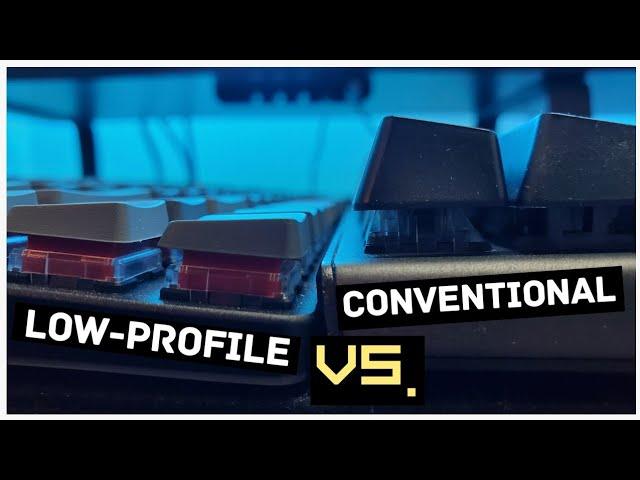
A standard mechanical keyboard usually has taller switches, taller keycaps, and more vertical movement. A low-profile keyboard shortens the body, switch height, and key travel to create a flatter typing angle.
That difference affects feel immediately. Standard mechanical boards often feel deeper, more deliberate, and more customizable. Low-profile boards often feel quicker, flatter, and easier to use without a wrist rest.
CHERRY’s MX switch overview shows how traditional switches can vary by actuation force, pre-travel, and feedback. Those details matter because “mechanical” does not describe one feel. Linear, tactile, clicky, silent, optical, magnetic, full-height, and low-profile switches can all behave differently.
| Buying Factor | Standard Mechanical Keyboard | Low-Profile Keyboard |
|---|---|---|
| Key travel | Deeper | Shorter |
| Desk height feel | Taller | Flatter |
| Customization | Often stronger | Model-dependent |
| Typing sound | Usually fuller | Often sharper or quieter |
| Wrist angle | May need wrist rest | Usually easier without one |
| Travel portability | Bulkier | Slimmer |
| Best buyer | Custom feel seeker | Compact setup user |
Standard Mechanical Boards Still Win On Custom Feel
The biggest advantage of a standard mechanical keyboard is variety. Switch choices, keycap profiles, case materials, mounting styles, stabilizers, foam, layouts, and modding options are broader than in most low-profile boards.
That matters for enthusiasts and gamers who know exactly what they like. A full-height keyboard can feel heavy, premium, and controlled. It can also offer a deeper sound and a more satisfying bottom-out feel.
Standard boards may also be easier to repair or modify, depending on the model. Hot-swappable switches, aftermarket keycaps, and enthusiast layouts are more common in full-height designs. Customization remains the full-height advantage for buyers who care about tuning feel over portability.
The downside is height. A tall keyboard can force the wrists upward if the desk and chair are not aligned well. Many users solve that with a wrist rest, but that adds more desk space and another accessory.
Low-Profile Keyboards Are Better For Compact Setups
Low-profile keyboards make sense when the desk is smaller, the setup is shared with work, or the player wants a flatter hand position. They can feel less bulky and easier to slide into a clean desk layout.
They also travel better. A slim keyboard is easier to pack with a laptop, handheld dock, or streaming kit. For creators who switch between gaming, editing, writing, and travel, that form factor has real value.
Logitech’s low-profile mechanical design highlights the appeal clearly: low-profile mechanical keys, multiple switch choices, and a flatter build aimed at daily use. The gaming versions of this idea push the same comfort and speed angle with more aggressive latency and RGB features.
A low-profile board is not automatically faster, but it can feel quicker because the fingers move less vertically.
Gamers Should Watch Actuation, Not Just Height
Gaming performance depends less on keyboard height and more on actuation behavior, latency, layout, rollover, and consistency. A low-profile switch with short travel may feel fast, but a full-height gaming keyboard with rapid trigger or adjustable actuation can be faster in the right game.
This is why buyers should avoid simple claims. A low-profile board is not automatically better for FPS. A standard mechanical board is not automatically better for precision. The switch technology and software matter.
For competitive games, look at actuation point, reset behavior, polling rate, key stability, and whether the layout gives enough mouse room. A tenkeyless or 75% board can matter more than whether the switches are low-profile or full-height.
Layout affects gameplay as much as switch height.
Typing Comfort Depends On Your Hands
Some users type better on full-height keys because they like the deeper travel and clearer feedback. Others type faster on low-profile boards because the fingers move less and the keyboard feels closer to a laptop without becoming mushy.
Wrist position is personal. A low-profile keyboard can reduce the need for a wrist rest, but it may feel too shallow for users who like a more traditional typing rhythm. A standard keyboard can feel more substantial, but it may become tiring if the desk is too high.
Noise matters too. Full-height mechanical boards can sound richer or louder. Low-profile boards can sound thinner, sharper, or quieter depending on switch and case design. Streamers should care because keyboard noise can leak into a microphone.
Streamers And Writers Need Different Priorities
A streamer needs a keyboard that does not dominate the microphone. A writer needs a board that stays comfortable over long sessions. A gamer needs layout and response. A compact desk user needs space.
That means the same keyboard may not serve every role equally. A loud clicky mechanical board might feel great for typing but terrible beside a condenser mic. A low-profile board might fit a clean stream desk but feel less satisfying for long writing sessions.
The best choice depends on the task that happens most often. If gaming is the priority, focus on input behavior and layout. If writing is the priority, focus on comfort and fatigue. If streaming is the priority, focus on noise and desk control.
The Next Keyboard Upgrade Is About Fit
Keyboard buying is moving away from one-size-fits-all advice. Full-height mechanical boards are getting faster and more customizable. Low-profile boards are getting more serious, with better switches, wireless performance, and gaming-focused layouts.
The pressure point is fit. A keyboard should match the desk, hands, microphone, chair height, and games. Chasing the newest switch type will not help if the board is too tall, too loud, or too wide.
Mechanical keyboard vs low-profile keyboard matters because feel is not a spec-sheet detail. Choose full-height mechanical if you want deeper travel, more customization, and a classic enthusiast feel. Choose low-profile if you want a flatter, cleaner, more compact board that fits modern gaming and work setups with less desk friction.