

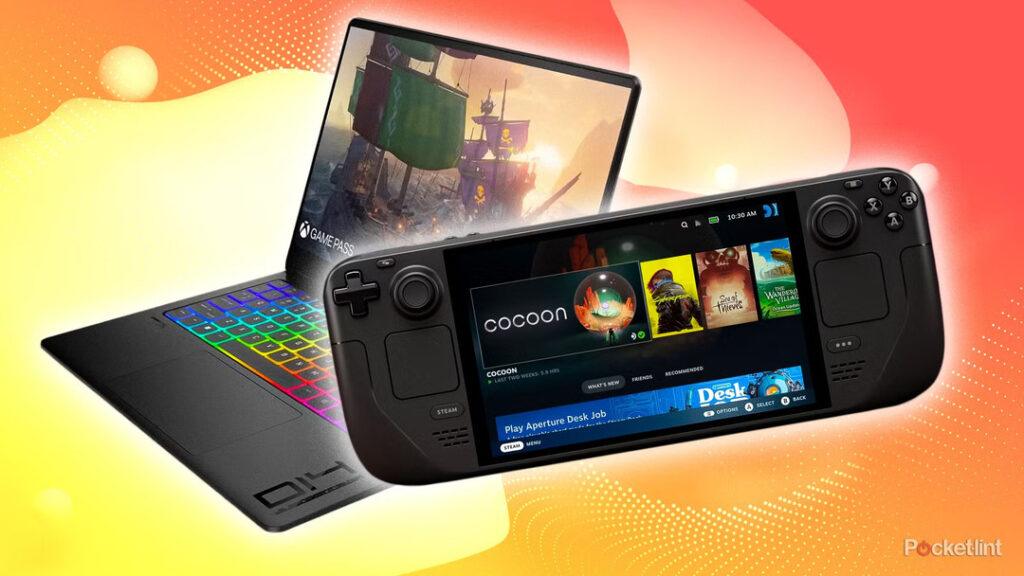
The gaming handheld vs laptop decision has become one of the clearest signs that portable PC gaming is no longer a niche. Handhelds now promise couch-friendly comfort and console-like convenience, while gaming laptops still offer the bigger screen, stronger hardware, and broader PC flexibility many players expect.
The mistake is treating both devices as the same kind of portable machine. A handheld gaming PC is built around short sessions, travel comfort, and instant access; a gaming laptop is built around full-power play, productivity, and a desk-friendly setup. Rave-Tech has already covered the hardware race behind devices like the Intel Arc G3 handheld, and the real buyer question is not which format is newer. It is which one fits the way you actually play.
Gaming Handheld vs Laptop Starts With Where You Play
The first difference is physical behavior. A handheld is designed to be picked up, played on the couch, packed into a bag, and used without a desk. It works best when gaming needs to fit around a commute, a hotel room, a shared TV, or a quick break.
A laptop is portable, but it still wants a surface. It works better with a charger, mouse, headset, cooling space, and sometimes an external controller. That makes it more flexible than a desktop, but less relaxed than a handheld.
That is why buyers should start with location, not specs. The best portable gaming device is the one you will actually use when you are tired, traveling, or away from your main setup.
| Buying Factor | Gaming Handheld | Gaming Laptop |
|---|---|---|
| Best use | Couch, travel, short sessions | Desk play, school, work, full PC use |
| Screen experience | Smaller built-in display | Larger display and higher-end panels |
| Controls | Integrated controller layout | Keyboard, trackpad, mouse, controller support |
| Performance ceiling | Lower power envelope | Higher GPU and CPU potential |
| Battery reality | Depends heavily on game and settings | Often needs charging for serious gaming |
| Upgrade path | Limited | Better storage, RAM, and accessory options on many models |
| Best buyer | Comfort-first player | Power-first multitasker |
Handhelds Win On Comfort And Immediacy
The biggest advantage of a gaming handheld is not raw performance. It is access. Devices like Valve’s Steam Deck OLED are built to make PC libraries feel more approachable in a handheld form, with an integrated screen, controls, speakers, battery, and sleep-style convenience.
That matters because friction kills gaming time. A player who does not want to sit at a desk after work may still play for an hour on the couch. A traveler may not want to unpack a laptop, mouse, charger, and controller just to play before bed. A handheld reduces the ritual.
Handhelds also fit a different emotional role. They make older games, indies, emulation-style libraries, cloud gaming, and lighter PC titles feel more accessible. Even when a handheld is not the most powerful device in the house, it may become the most-used one because it is easier to reach.
Laptops Still Win On Power And Versatility
Gaming laptops remain the stronger choice for buyers who want one machine to do everything. They can handle games, schoolwork, video editing, streaming, browsing, productivity apps, external monitors, and keyboard-heavy PC tasks with fewer compromises.
The power ceiling is also higher. NVIDIA’s GeForce RTX 50 Series laptops show how gaming laptops keep pushing graphics performance, AI-assisted rendering, creator workflows, and thinner high-performance designs. That kind of hardware headroom matters for players who want higher settings, bigger screens, competitive frame rates, or modern AAA performance.
A laptop also works better as a long-term main computer. It can replace a desktop for many users. A handheld usually cannot. A handheld is a gaming-first device; a laptop is a full PC first.
Battery Life Is More Complicated Than Buyers Expect
Battery life is where both categories can disappoint if buyers believe the best-case marketing too literally. Handhelds are portable, but demanding games can drain them quickly. Laptops have larger batteries, but high-performance gaming often pushes them toward the charger.
The difference is expectation. A handheld feels natural for lower-power play, older games, indie titles, and adjusted settings. Users expect to manage resolution, frame limits, brightness, and performance modes. A laptop buyer may expect stronger performance, then realize that the full experience often requires wall power.
This makes the battery question less about which lasts longer and more about what kind of gaming you want away from an outlet. If you want light-to-medium gaming in short sessions, a handheld may feel better. If you want serious performance, you may be carrying a laptop charger anyway.
Game Libraries And Compatibility Can Decide The Winner
A gaming laptop has the compatibility advantage. Windows laptops generally support more launchers, peripherals, anti-cheat systems, mods, productivity tools, and niche PC utilities without extra work. That matters for players who live across Steam, Epic, Battle.net, Xbox app, Discord, OBS, mods, and competitive games.
Handhelds are improving, but compatibility still varies by device and operating system. SteamOS-style handhelds can feel clean and console-like with verified games, while Windows handhelds can access more software but may require more setup. Neither path is universally better.
This is where buyers should be honest about their library. A Steam-heavy player who values comfort may love a handheld. A competitive player who needs broad launcher support, voice chat, multitasking, and consistent anti-cheat compatibility may be safer with a laptop.
The Hidden Cost Is The Setup Around The Device
A handheld looks cheaper and simpler until accessories enter the picture. Many buyers eventually add a case, dock, charger, microSD card or SSD upgrade, screen protector, controller, keyboard, mouse, or external display. That can turn a simple device into a small ecosystem.
A laptop has its own accessory costs: cooling stand, mouse, headset, backpack, external monitor, keyboard, storage, and possibly a controller. But those accessories often support both gaming and work, which can make the value easier to justify.
The hidden cost is also ergonomic. A handheld can strain wrists during long sessions. A laptop can strain posture if used badly on a bed or couch. Portability does not automatically mean comfort, especially after two hours of play.
The Next Portable Gaming Fight Is About Balance
The next pressure point in portable gaming is balance. Handheld makers are chasing better chips, displays, cooling, battery life, and software layers. Laptop makers are chasing thinner designs, stronger GPUs, better efficiency, and AI-assisted performance features.
That means the gap will keep shifting. Handhelds will become more capable, but they still live inside tight power and cooling limits. Laptops will become more efficient, but they still need size, airflow, and power to deliver their best performance.
Buyers should watch three signals: software polish, battery behavior, and heat. A handheld with great specs but clumsy software can feel unfinished. A laptop with strong hardware but loud fans and weak battery life can become annoying outside a desk setup.
The gaming handheld vs laptop choice is really about trade-offs, not a single winner. Pick a handheld if you want comfort, travel play, and quick access to your library. Pick a laptop if you want stronger performance, broader compatibility, and a machine that can handle work as well as games. The smartest 2026 purchase is the device that fits your real gaming habits, not the one that wins the loudest spec-sheet argument.
FAQ’s
Is a gaming handheld better than a gaming laptop?
A gaming handheld is better for couch play, travel, and short sessions. A gaming laptop is better for higher performance, larger displays, broader compatibility, and productivity. The better choice depends on how and where you play.
Can a gaming handheld replace a laptop?
A gaming handheld can replace a laptop only for gaming-focused users with light computing needs. For school, work, content creation, multitasking, and keyboard-heavy tasks, a laptop remains the more practical main computer.
Should I buy a handheld gaming PC in 2026?
A handheld gaming PC makes sense if you want portable access to PC games and value comfort over maximum performance. Check game compatibility, battery expectations, storage, and whether your favorite titles work well on the device.