

The MSI Claw 8 EX AI Plus is not just another Windows gaming handheld with a bigger screen and a louder spec sheet. It is MSI’s chance to reset the Claw story, give Intel a serious handheld showcase, and prove that portable PC gaming has room for more than AMD-powered machines and Steam Deck comparisons.
That matters because handheld buyers are getting sharper. They have already seen what happens when a device chases impressive hardware before solving comfort, battery life, software flow, and everyday value, the same upgrade-pressure problem that appears when creators spend money on the wrong tech before fixing the real bottleneck.
MSI Claw 8 EX AI Plus Is Really an Intel Redemption Test
The Claw brand has something to prove. MSI’s early handheld efforts entered a crowded market where buyers already had strong alternatives, and raw ambition was not enough to erase concerns around performance, battery behavior, and the overall Windows handheld experience.
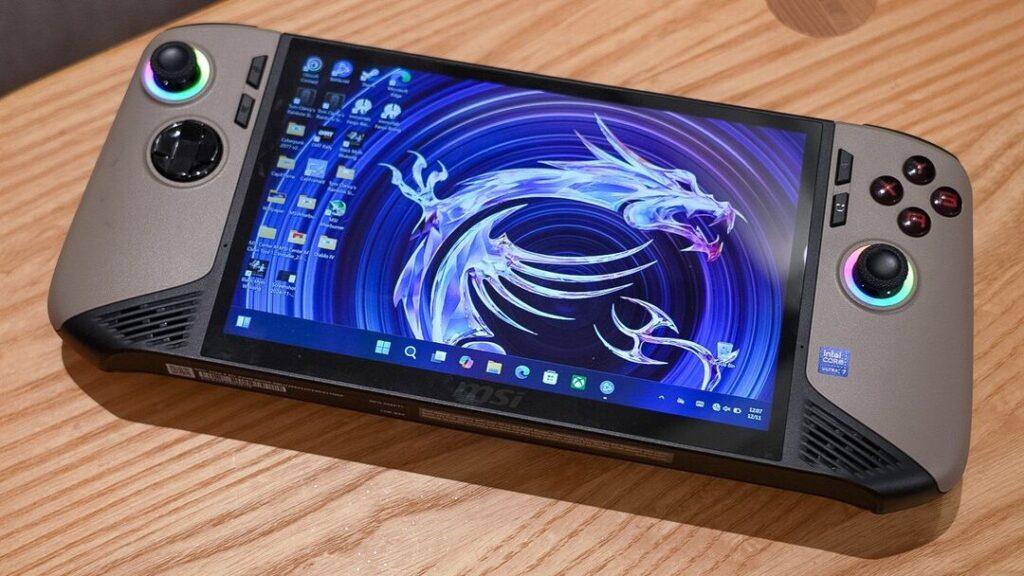
The MSI Claw 8 EX AI Plus changes the conversation because it moves away from simply being “another Windows handheld” and becomes one of the first major devices built around Intel’s dedicated handheld-gaming push. Its headline feature is the Intel Arc G3 Extreme chip, a platform designed for portable gaming PCs rather than conventional laptops squeezed into smaller shells.
That distinction is important. Handheld gaming devices live inside tight constraints. They need enough power to run modern PC games, but they also need acceptable battery life, manageable heat, comfortable ergonomics, and software that does not make every session feel like desktop troubleshooting on an eight-inch screen.
The real question is whether MSI can turn Intel’s new silicon into a complete product. The chip alone cannot win if the device feels hot, expensive, noisy, short-lived, or awkward in the hand.
The Arc G3 Extreme Makes This More Than a Minor Refresh
The Arc G3 Extreme is the reason this device has real news value. Intel’s new handheld gaming platform is built around Xe3 GPU cores and modern graphics features intended to make portable PC gaming smoother and more efficient. Intel’s own Arc G-Series handheld gaming platform gives the category a more focused foundation than the old habit of adapting laptop hardware for handheld use.
That matters because the handheld PC market has reached a new phase. Buyers are no longer impressed by the idea of running PC games on a small device. They already know that is possible. The harder question is whether the device can do it well enough, long enough, and comfortably enough to replace another gadget in the bag.
The MSI Claw 8 EX AI Plus reportedly supports up to 32GB of LPDDR5x memory and includes a single NVMe M.2 SSD slot for storage. It also features an eight-inch 1920 x 1200 touchscreen with up to a 120Hz refresh rate, redesigned grips, Hall effect triggers and sticks, improved haptics, and a Void Purple color option.
Those details make it look like a serious premium handheld. But premium handhelds face a brutal standard: if the device costs much more than a Steam Deck or standard console, it has to feel meaningfully better in actual play, not just in launch-day specifications.
MSI Is Chasing the Power User, Not the Casual Console Buyer
The Claw 8 EX AI Plus is unlikely to be the handheld that wins over casual buyers shopping for the cheapest way to play games on the couch. This is aimed at a more demanding user: someone who wants a Windows handheld, plays across multiple PC storefronts, cares about performance headroom, and is willing to deal with the trade-offs that come with a more powerful portable machine.
That is both the opportunity and the danger. Windows handhelds can be flexible, but they are rarely as frictionless as console-like devices. A buyer can install more launchers, access more games, tweak more settings, and use the machine like a compact PC. They may also face more driver updates, interface friction, background processes, and inconsistent game behavior.
MSI seems to understand that hardware feel matters as much as performance. The redesigned grips and Hall effect controls suggest a push toward longer-session comfort and durability. That is smart because handheld buyers remember physical flaws quickly. A device can benchmark well and still fail if it cramps hands, feels unbalanced, or drains too fast during the games people actually play.
Here is the practical comparison buyers should make:
| Device Type | Best Fit | Main Advantage | Biggest Risk |
|---|---|---|---|
| MSI Claw 8 EX AI Plus | Windows handheld power users | Intel Arc G3 Extreme, 8-inch 120Hz screen, improved controls | Price, battery life, and real-world performance still need proof |
| Steam Deck-style handheld | Console-like PC gaming | Mature experience and strong handheld identity | Less raw performance than some premium rivals |
| ASUS ROG Ally-style handheld | Windows gaming flexibility | Strong PC game access and performance options | Battery and Windows friction can matter |
| Lenovo Legion Go-style handheld | Large-screen portable play | Bigger display and flexible hardware ideas | Size and portability trade-offs |
| Gaming laptop | Higher-performance mobile gaming | More power and better cooling headroom | Not truly handheld |
The key takeaway is simple: the Claw 8 EX AI Plus should not be judged as a console replacement. It should be judged as a premium portable PC.
The Eight-Inch Screen Could Be the Sweet Spot or the Weight Trap
An eight-inch 1920 x 1200 screen with a 120Hz refresh rate sounds ideal for modern handheld gaming. It gives games more room to breathe than smaller displays while still keeping the device within a portable form factor. Text-heavy RPGs, strategy games, menus, launchers, and Windows interfaces all benefit from more screen space.
But screen size is never free. Larger panels can affect battery life, weight, balance, and one-handed comfort when navigating menus. Higher refresh rates can improve smoothness, but they also create temptation to push performance beyond what the battery can reasonably sustain.
This is where handheld design becomes a discipline rather than a spec race. A premium screen is valuable only if the chip, battery, thermals, software, and controls work together. Balance beats bragging rights in a device meant to be held for long sessions.
The improved haptics and Hall effect sticks also matter because control quality is one of the quiet separators between a device people admire and a device people keep using. Hall effect components can help reduce drift concerns, while better haptics can make the device feel less generic. Those are not glamorous upgrades, but they affect trust over time.
Intel Now Has to Prove Drivers, Battery, and Heat
The hardest part of the MSI Claw 8 EX AI Plus story will not be the announcement. It will be the first serious wave of real-world testing.
Intel needs the Arc G3 Extreme to do more than look impressive in a product briefing. It has to perform reliably across demanding games, recover smoothly from sleep, handle different launchers, deliver consistent frame pacing, support upscaling well, and avoid the kind of driver rough edges that make buyers nervous.
MSI has to solve the hardware side at the same time. Cooling design, fan noise, battery capacity, charging behavior, screen tuning, storage access, and grip comfort all matter. Handheld gaming has no patience for isolated excellence. A great chip in a compromised shell becomes a missed opportunity.
That is why MSI’s Claw 8 EX AI Plus reveal feels bigger than one product launch. It puts pressure on Intel, MSI, and the wider Windows handheld market to show whether premium handhelds can move beyond short battery life, high prices, and inconsistent software polish.
The risk is obvious: performance must travel. A handheld cannot behave like a gaming laptop that happens to have joysticks. It has to feel designed for the couch, the commute, the hotel room, and the quick session before sleep.
The Next Signals Will Decide Whether This Is Hype or a Real Shift
The first signal to watch is price. If the MSI Claw 8 EX AI Plus lands too high, it will be judged less against mainstream handhelds and more against gaming laptops, consoles, and complete desktop upgrades. That is a difficult comparison for any portable machine.
The second signal is battery life under demanding games. Official battery claims can be useful, but handheld buyers care about actual sessions. How long does it last in a modern AAA game? How loud does it get? Does performance drop after heat builds? Can users tune it easily without becoming part-time system administrators?
The third signal is software polish. MSI Center M, Windows 11 handheld behavior, game launcher management, driver updates, and control mapping will affect the experience as much as the hardware. A device can have serious power and still feel unfinished if the interface constantly reminds users they are wrestling with Windows.
The MSI Claw 8 EX AI Plus has the right ingredients to make Intel relevant in handheld gaming again, but ingredients are not a verdict. The device needs real performance, sensible thermals, lasting battery behavior, comfortable controls, and a price that does not turn curiosity into hesitation. If MSI and Intel get that balance right, this could become one of the most important Windows handhelds of 2026. If they miss, it will be remembered as another powerful gadget that misunderstood what portable gaming actually demands.